Beginners Guide
Deutsch-Neuguinea
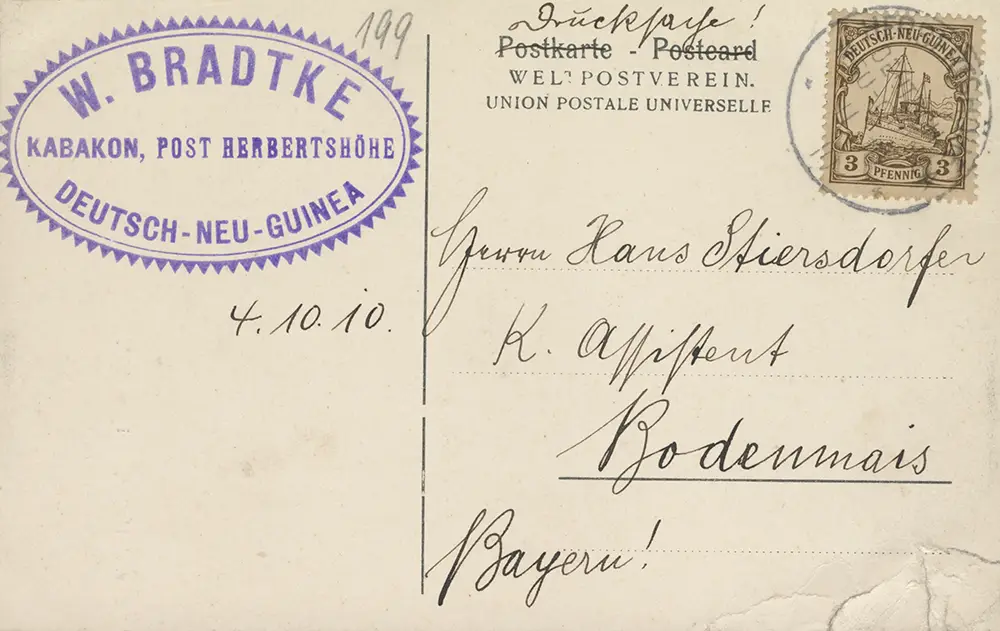
Postcard sent as printed matter from Kabakon Island via Herbertshöhe to Bayern
General
PO China
PO Morocco
PO Turkey
D-NG
D-OA
D-SWA
Kamerun
Karolinen
Kiautschou
Marianen
Marshall-In.
Samoa
Togo
Deutsch-Neuguinea (German New Guinea)
By Gannon Sugimura
Introduction

The administrative heart of the German Colonial Empire – at least the part of it outside of Africa – had an auspicious beginning. Before it ended, the colonial administrations of the Carolines, the Marianas, and the Marshall Islands were all effectively provinces of German New Guinea. Only German Samoa was not overseen by the colonial governor in New Guinea.
The official colonization of German New Guinea began on 17 November 1884, when the Deutsche Neu Guinea Compagnie (later spelled Kompagnie) set up shop. But the initial German presence in the Pacific actually dated to the mid-1850’s, when the Hamburg firm of Godeffroy & Sohn began trading in copra from their offices in Apia, Samoa. Their trading activities extended into what would become German New Guinea. Within what would eventually become GNG, the firm of Hernsheim and Robertson established a trading post at Matupi in 1877.
By 1884, the Dutch were firmly in control of the western half of the island of New Guinea. This left the eastern half available for colonization by other powers. The British and the Germans agreed to divide eastern New Guinea between them, with the north-east quarter of the island going to Germany. During the colonial period, this part of New Guinea was referred to as “Kaiser-Wilhelms Land”. German New Guinea also included the two large Bismarck archipelago islands named Neu Pommern (later New Britain) and Neu Mecklenburg (later New Ireland) by Germany, along with a number of smaller islands including Buka, Bougainville, Santa Ysabel, and Choiseul.
The German flag was raised at the trading posts at Mioko (left) and Matupi in November 1884, when the Neu Guinea Kompagnie exercised their powers under an Imperial charter granting them the right to open a commercial venture there. In common with the other German colonies founded between 1884 and 1885, Berlin did not directly order the colonies’ creation. Instead, a private commercial enterprise obtained an Imperial charter provided whatever protection the Imperial flag provided, as well as spelling out the economic reason(s) for founding the colony.
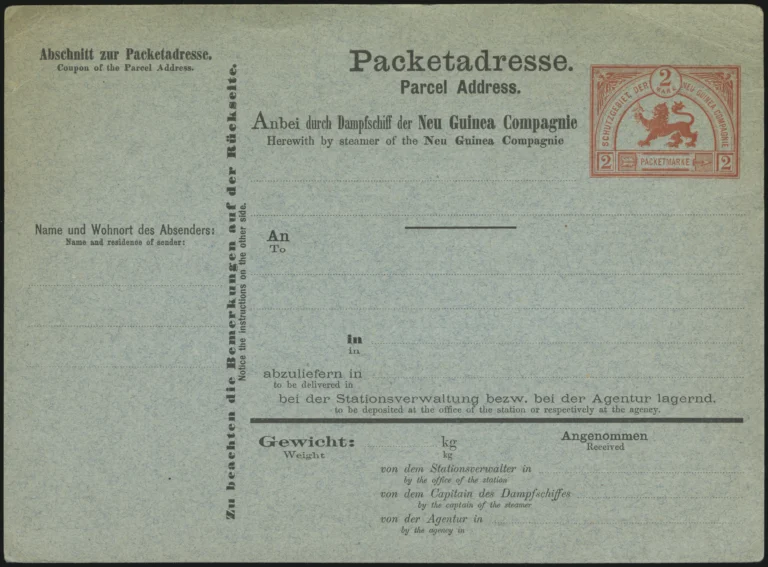
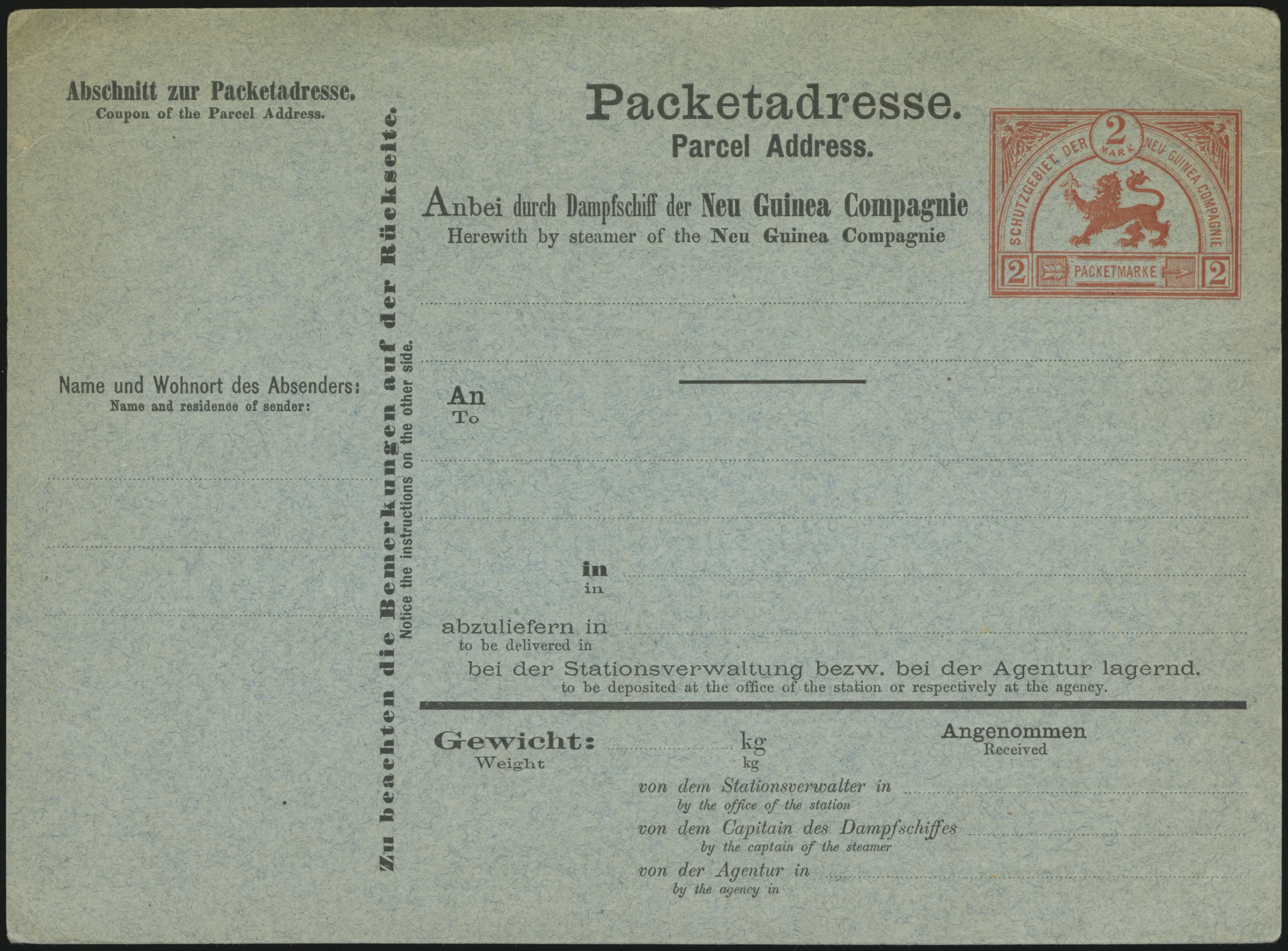
In the case of German New Guinea, the Neu Guinea Compagnie was officially charged with generating agricultural products for the Empire. Unlike in the other colonies, with the exception of German East Africa, the Compagnie exercised a number of powers of being a country, including minting its own coins in base and precious metal alloys. The coins, which show a bird of paradise (Figure 2) on the obverse of all the denominations other than the 1- and 2-Pf coins, are very beautiful and highly collectable in their own right (below).

The company was not, however, terribly effective in its commercial mission. By 1899, it was effectively bankrupt and could not continue with the operations it had been running during the previous 14 years. By this time, Berlin was now establishing colonies throughout the Pacific directly rather than through a chartered company. Germany would take possession outright of the Caroline Islands, the Marianas, Kiautschou, and Samoa between 1898 and 1900. Germany also took over administration of German New Guinea and appointed a colonial governor there in 1899. The colonial government of New Guinea would eventually gain oversight of the Carolines, the Marianas, and the Marshall Islands in 1906. These colonies ran essentially as provinces of German New Guinea from that point until Germany lost control of the area during the First World War.
In 1899, the borders of German New Guinea were also settled into their final configuration as a result of the Tripartite Convention of 1899, which covered British, German, and American interests in the central Pacific. As it relates to New Guinea, the treaty also affected German New Guinea tangentially by altering its eastern borders. Germany had initially included the northern half of the Solomon Islands as part of her claim to New Guinea in 1884. By 1893, however, this claim was running up against the claims of the British, who had established a “protectorate” in the southern Solomon Islands. The end result was that Germany agreed to give up any claim to the islands south and east of the islands of Bougainville and Buka, resulting in the transfer of these islands from German to British control.

These agreements between the western powers resulted in German colonization of a territory roughly 50% that of the contemporary German Empire, but with a population estimated to be about 600,000 – or just 1% of the contemporary German population. German New Guinea was never able to attract anything like the number of colonists that other colonies did; the German-born population of the colony rose to only about 600 by the end of the colonial period. In common with all the colonies excepting only Samoa and Togo, German New Guinea was a constant drain on the Imperial treasury in Berlin. German New Guinea is said to have held the dubious distinction of the single most expensive colonial possession Germany ever held.
With such a small population, Germany was unable to hold control of the colony very long once the First World War began. The majority of German resistance ended by the end of September 1914. Traces of German civil administration continued in many areas, notably the operation of some post offices in more outlying areas. These post offices appear to have functioned under Anglo-Australian occupation more or less as they had during the German period through the end of 1914, although many began to use overprinted stamps issued by the occupying forces.
At the conclusion of the First World War, the occupation of formerly German colonial possession fell to specific Allied Nations. Officially, the League of Nations gave the major portion of German New Guinea was handed over to the United Kingdom as the “New Guinea Mandate”. On a practical level, this mandate was actually administered by Australia, which was already administering the neighboring “Territory of Papua” in the southeast quadrant of the island of New Guinea. Eastern New Guinea would eventually remain under Australian administration for nearly 60 years, although the two separate territorial units would be unified as “the Territory of Papua and New Guinea” in 1949. Independence from Australia occurred in 1975 as “Papua New Guinea”, the name by which it is known today.
The Vorläufer Period

The first German post office in German New Guinea was the one opened at the town of Finschhafen on 17 February 1888, just over three years after the establishment of German New Guinea.
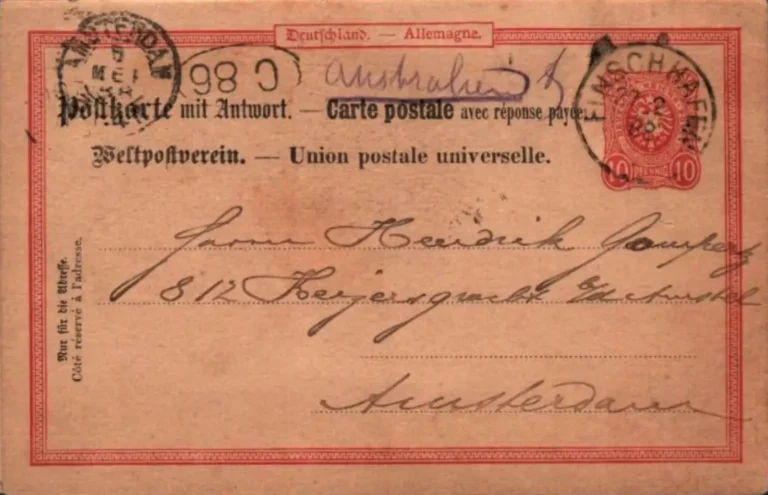
The Vorläufer period would end up lasting almost a decade, until distinctive stamp issues started to appear between September 1897 and July 1898. Vorläufer usages include stamps from the definitive series of 1880, the “Pfennig” issue, as well as the “Krone / Adler” (Crown / Eagle) definitive series of 1889.
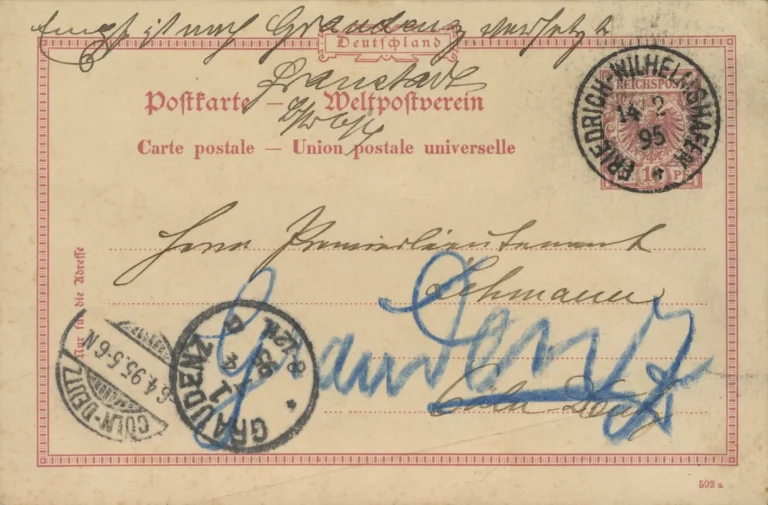
In this area of GNG postal history, Vorläufer uses of 1880 series 3 Pf and 25 Pf stamps are particularly rare and quite valuable. As was the case in other colonies, stamps of these two values were never issued in the colony itself as there was no real need for the rates they paid; genuinely used examples exist, however, since the stamps themselves were postally valid in New Guinea if they happened to show up there. Ordinary postal stationery issues prepared for Germany proper, particularly postal cards, from the above series can also occur as Vorläufer usages.
“Deutsch / Neu-Guinea” Overprints

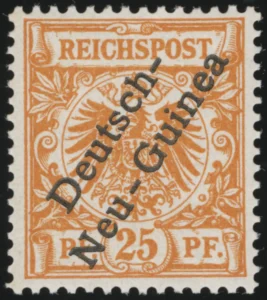
Beginning in September 1897, the Reichspost began to issue overprinted stamps distinctive to each colony and office abroad. This created six basic denominations of stamps, which were available at colonial post offices: 5 Pf, 10 Pf, 20 Pf, and 50 pf stamps were issued in New Guinea in September 1897. These were joined by 3 Pf and 25 Pf (right) stamps in July 1898. These dates mark the end of the Vorläufer period in New Guinea for their respective denominations. Uses of unoverprinted German stamps after these dates count as Mitläufer, with the sole exception of the 2 Mark stamp prepared for internal use. For this one stamp, the Vorläufer period continued until March 1901, when the first of the “Large Yachts” were issued in New Guinea.
The overprinted “Deutsch- / Neu-Guinea” issues present the same challenges as the underlying 1889 series. Plate flaws, such as the “Bruch der Banderoll” variety of the 3 Pf, can also be found in German New Guinea issues. Collectors of shades can sometimes find interesting varieties in this issue. Of the six denominations, three (5 Pf, 20 Pf, and 50 Pf) are listed in only one shade. Two of the remaining values (10 Pf and 25 Pf) are listed in two shades each, while the final value (3 Pf) is listed with six shades.
The true area for variety collectors, however, lies not in varieties of the underlying stamp but rather in the overprint. Four positional flaws in the overprinting plate (below) are noted as follows:
- Shortened foot of “t” in “Deutsch” (position 10 – Michel suffix “X”)
- Thinner, left-hand vertical line of “h” in “Deutsch” (position 58 – suffix XI)
- Broken “c” of “Deutsch” (position 60 – suffix XII)
- Open first “e” in “Neu-Guinea“ (position 67 – suffix XIII)

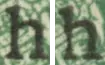


Stamps with these overprint flaws are listed described as follows: a normal 5 Pf stamp would be Mi 2. A similar 5 Pf stamp from position 67, the “open first e” variety, would instead be Mi 2 XIII.
Additionally, the 25 Pf stamp exists with the overprint applied upside-down (right). This inverted overprint variety is listed in unused condition in Michel, with the notation that one sheet of 100 stamps was printed, but this sheet was not issued in New Guinea.
Stamps from the overprinted series remained valid in New Guinea until 30 September 1901, although later cancellation dates are known.
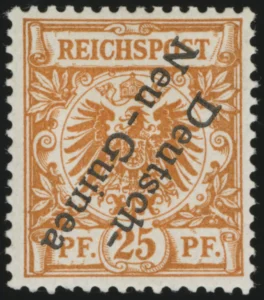
Beginning in September 1897, the Reichspost began to issue overprinted stamps distinctive to each colony and office abroad. This created six basic denominations of stamps, which were available at colonial post offices: 5 Pf, 10 Pf, 20 Pf, and 50 pf stamps were issued in New Guinea in September 1897. These were joined by 3 Pf and 25 Pf (below) stamps in July 1898.
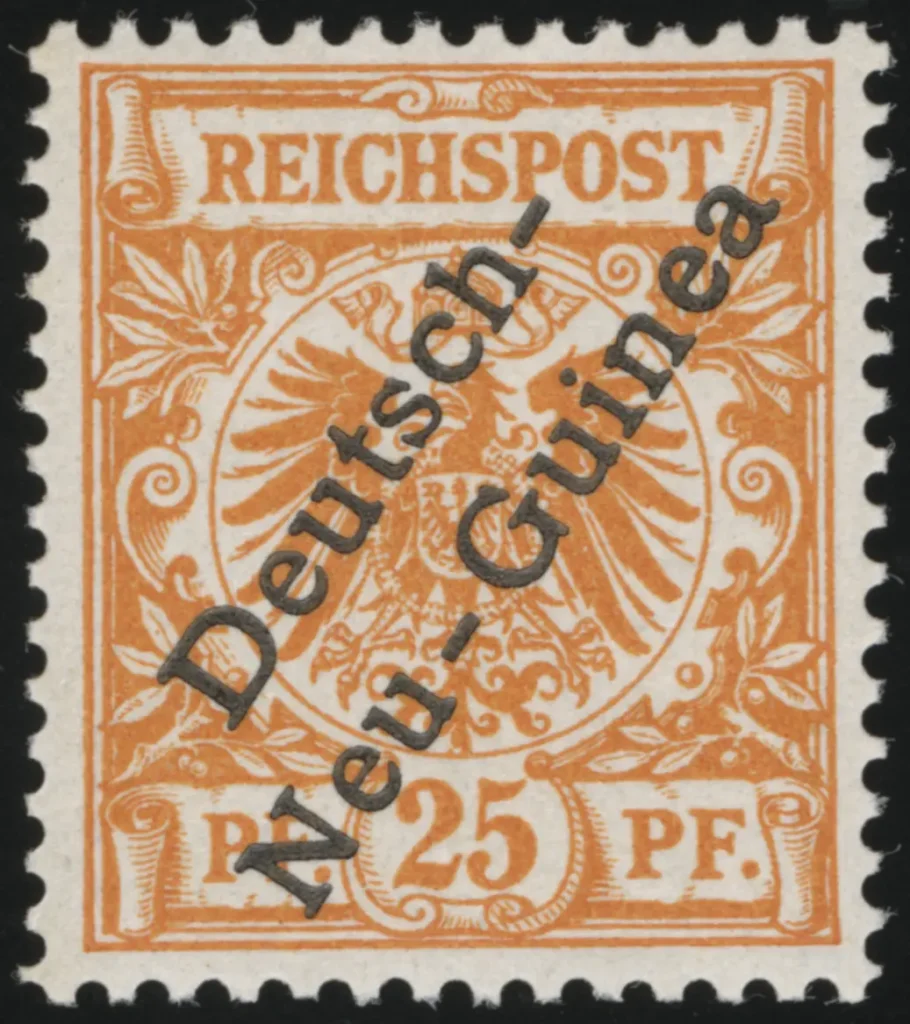
These dates mark the end of the Vorläufer period in New Guinea for their respective denominations. Uses of unoverprinted German stamps after these dates count as Mitläufer, with the sole exception of the 2 Mark stamp prepared for internal use. For this one stamp, the Vorläufer period continued until March 1901, when the first of the “Large Yachts” were issued in New Guinea.
The overprinted “Deutsch- / Neu-Guinea” issues present the same challenges as the underlying 1889 series. Plate flaws, such as the “Bruch der Banderoll” variety of the 3 Pf, can also be found in German New Guinea issues. Collectors of shades can sometimes find interesting varieties in this issue. Of the six denominations, three (5 Pf, 20 Pf, and 50 Pf) are listed in only one shade. Two of the remaining values (10 Pf and 25 Pf) are listed in two shades each, while the final value (3 Pf) is listed with six shades.
The true area for variety collectors, however, lies not in varieties of the underlying stamp but rather in the overprint. Four positional flaws in the overprinting plate (below) are noted as follows:
- Shortened foot of “t” in “Deutsch” (position 10 – Michel suffix “X”)
- Thinner, left-hand vertical line of “h” in “Deutsch” (position 58 – suffix XI)
- Broken “c” of “Deutsch” (position 60 – suffix XII)
- Open first “e” in “Neu-Guinea“ (position 67 – suffix XIII)
Stamps with these overprint flaws are listed described as follows: a normal 5 Pf stamp would be Mi 2. A similar 5 Pf stamp from position 67, the “open first e” variety, would instead be Mi 2 XIII.
Additionally, the 25 Pf stamp exists with the overprint applied upside-down (below).
This inverted overprint variety is listed in unused condition in Michel, with the notation that one sheet of 100 stamps was printed, but this sheet was not issued in New Guinea.
Stamps from the overprinted series remained valid in New Guinea until 30 September 1901, although later cancellation dates are known.
The Yacht Series

The overprinted “Deutsch- Neu-Guinea” stamps were replaced in stages beginning in December 1900. The so-called “Small Yachts”, i.e. those with face values between 3 Pf and 80 Pf, were issued in that month. The “Large Yachts” (right), with values of 1 Mark and higher, were first issued in March 1901.
These members of the Yacht series were issued on unwatermarked paper, as were the first such issues for all colonies. The unwatermarked Yacht stamps are remarkably free of plate flaws. Only one, affecting two positions of the 40 Pf denomination, is noted in Michel. The Yacht series printed on unwatermarked paper were ultimately the last stamps issued by the German colonial administration.
That is not to say, however, that these stamps were the last stamps printed. The three lowest and the highest denominations of the Yacht series – 3 Pf, 5 Pf, 10 Pf, 5 M – were printed on watermarked paper , but these watermarked issues were only for sale in Germany, and were never available for use in the colony.
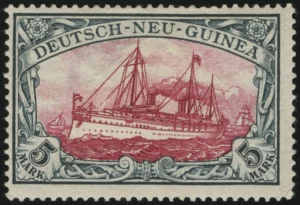
The overprinted “Deutsch- Neu-Guinea” stamps were replaced in stages beginning in December 1900. The so-called “Small Yachts”, i.e. those with face values between 3 Pf and 80 Pf, were issued in that month. The “Large Yachts” (below), with values of 1 Mark and higher, were first issued in March 1901.
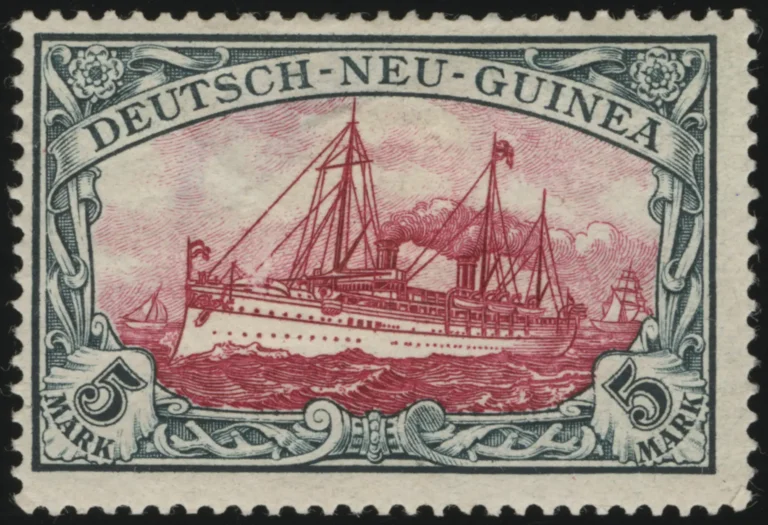
These members of the Yacht series were issued on unwatermarked paper, as were the first such issues for all colonies. The unwatermarked Yacht stamps are remarkably free of plate flaws. Only one, affecting two positions of the 40 Pf denomination, is noted in Michel. The Yacht series printed on unwatermarked paper were ultimately the last stamps issued by the German colonial administration.
That is not to say, however, that these stamps were the last stamps printed. The three lowest and the highest denominations of the Yacht series – 3 Pf, 5 Pf, 10 Pf, 5 M – were printed on watermarked paper , but these watermarked issues were only for sale in Germany, and were never available for use in the colony.
Watermark & Peace/War Printings

The watermarked yacht issues were watermarked with diamond-shaped lozenges referred to as “Wasserzeichen 1” in Michel and “Watermark 125” in Scott (right).
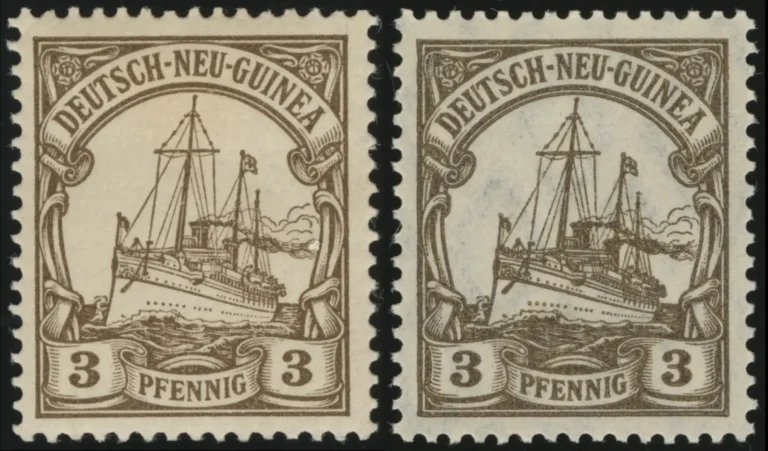
Distinguishing between the watermarked and unwatermarked issues is relatively easy in the case of German New Guinea. Except for the 3 Pf stamp, the name of the colony on the watermarked stamps is shown as two words, “Deutsch-Neuguinea” instead of “Deutsch-Neu-Guinea”, as on all the unwatermarked issues. The watermarked 3 Pf stamp uses the three-word “Deutsch-Neu-Guinea”.
Peacetime printings (Friedensdruck) and wartime printings (Kriegsdruck) were created for the 5 Pf, 10 Pf, and 5 M denominations; only Kriegsdruck examples were printed for the 3 Pf denomination.
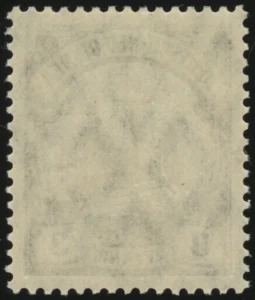
The 3 Pf denomination only exists as Kriegsdruck, and in some ways, is the textbook definition of what that means. The stamps are much darker and drabber than the earlier issues, with the details being far more blurry.
The gum is almost always darker and yellowish. In many cases, the watermark is so heavy, it can be seen from the front without a watermark tray (right).
Collectors of the various varieties of the 5 M value on watermarked paper will also find it easier to distinguish between them as well as whether a particular stamp is Friedensdruck or Kriegsdruck. In the case of German New Guinea, printings were made with all three possible vignettes. These can be distinguished as follows:
Unlike some of the other colonies, perforations are key. Stamps of the watermarked German New Guinea 5 M value with 26:17 perforations can be either Friedensdruck (with Type I vignette) or Kriegsdruck (with Type II vignette). 5 M stamps with 25:17 perforations are Kriegsdruck (with either Type II or Type III vignette).
Therefore, any stamp with a Type I vignette must be Friedensdruck and exists only with 26:17 perforations. Similarly, all stamps with Type III vignettes are Kriegsdruck and must have 25:17 perforations. Only Type II vignettes can appear on either Friedensdruck or Kriegsdruck stamps, but the perforations allow for easy distinction – 26:17 perforations indicate a Friedensdruck stamp, while 25:17 perforations indicate Kriegsdruck.
Value-wise, the Type I and Type II vignette stamps are reasonably inexpensive as they have Michel catalogue values between €40 and €60 for a hinged example. The Type III vignette, however, is quite the opposite, having a CV of €900 for a hinged stamp and €2200 for never hinged. This is higher than any CV from the colonial period excepting only the 25 Pf with inverted overprint and some of the British occupation issues.
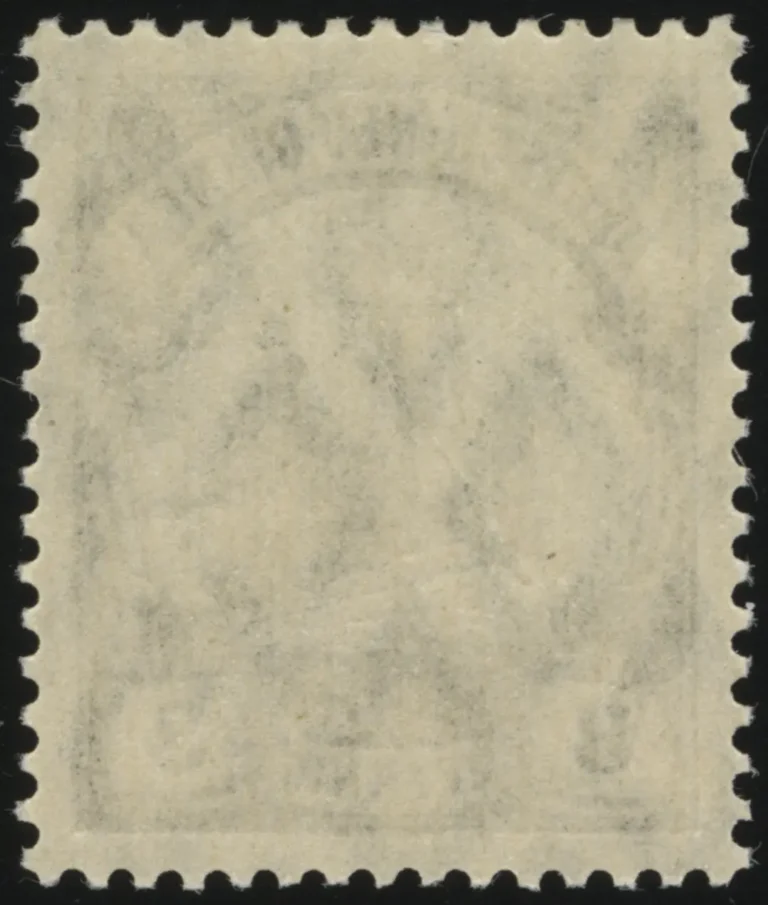
The watermarked yacht issues were watermarked with diamond-shaped lozenges referred to as “Wasserzeichen 1” in Michel and “Watermark 125” in Scott (below).
Distinguishing between the watermarked and unwatermarked issues is relatively easy in the case of German New Guinea. Except for the 3 Pf stamp, the name of the colony on the watermarked stamps is shown as two words, “Deutsch-Neuguinea” instead of “Deutsch-Neu-Guinea”, as on all the unwatermarked issues. The watermarked 3 Pf stamp uses the three-word “Deutsch-Neu-Guinea”.
Peacetime printings (Friedensdruck) and wartime printings (Kriegsdruck) were created for the 5 Pf, 10 Pf, and 5 M denominations; only Kriegsdruck examples were printed for the 3 Pf denomination.
The 3 Pf denomination only exists as Kriegsdruck, and in some ways, is the textbook definition of what that means. The stamps are much darker and drabber than the earlier issues, with the details being far more blurry.
The gum is almost always darker and yellowish. In many cases, the watermark is so heavy, it can be seen from the front without a watermark tray (below).
Collectors of the various varieties of the 5 M value on watermarked paper will also find it easier to distinguish between them as well as whether a particular stamp is Friedensdruck or Kriegsdruck. In the case of German New Guinea, printings were made with all three possible vignettes. These can be distinguished as follows:
Unlike some of the other colonies, perforations are key. Stamps of the watermarked German New Guinea 5 M value with 26:17 perforations can be either Friedensdruck (with Type I vignette) or Kriegsdruck (with Type II vignette). 5 M stamps with 25:17 perforations are Kriegsdruck (with either Type II or Type III vignette).
Therefore, any stamp with a Type I vignette must be Friedensdruck and exists only with 26:17 perforations. Similarly, all stamps with Type III vignettes are Kriegsdruck and must have 25:17 perforations. Only Type II vignettes can appear on either Friedensdruck or Kriegsdruck stamps, but the perforations allow for easy distinction – 26:17 perforations indicate a Friedensdruck stamp, while 25:17 perforations indicate Kriegsdruck.
Value-wise, the Type I and Type II vignette stamps are reasonably inexpensive as they have Michel catalogue values between €40 and €60 for a hinged example. The Type III vignette, however, is quite the opposite, having a CV of €900 for a hinged stamp and €2200 for never hinged. This is higher than any CV from the colonial period excepting only the 25 Pf with inverted overprint and some of the British occupation issues.
Postal Stationery

Postal stationery in this colony was limited to postal cards.
Vorläufer uses of unoverprinted German postal cards was followed by uses of 1889 series postal cards overprinted in a manner similar to the stamps of that issue which first appeared at colonial post offices in 1897.
Yacht series postal cards also joined Yacht stamps in 1900 (right). All cards were issued in 5 Pf (domestic) and 10 Pf (international) rates, both in single use and paid-reply versions.
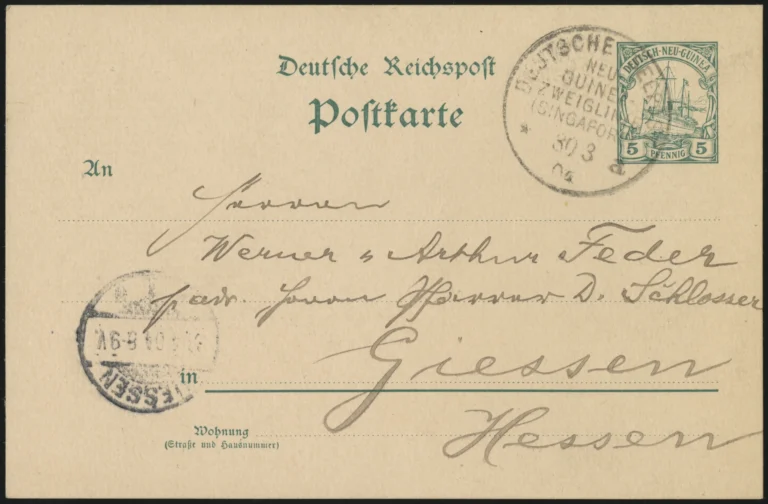
Postal stationery in this colony was limited to postal cards. Vorläufer uses of unoverprinted German postal cards was followed by uses of 1889 series postal cards overprinted in a manner similar to the stamps of that issue which first appeared at colonial post offices in 1897. Yacht series postal cards also joined Yacht stamps in 1900 (below). All cards were issued in 5 Pf (domestic) and 10 Pf (international) rates, both in single use and paid-reply versions.
Neu Guinea Compagnie

Occupation

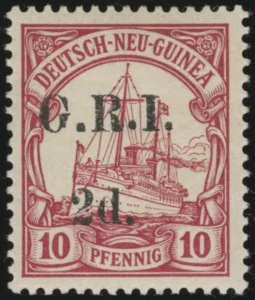
Another unique issue of stamps involves those issued by the British/Australian occupation authorities beginning in 1914. Captured stamps of German New Guinea were overprinted with “G.R.I.” (“Georgius Rex Imperator” or “George King and Emperor”) and a new value in British currency prior to being placed in use in on the island of New Britain (top right). This island was where the majority of the population lived during the colonial period, and where the capital city of Rabaul was located.
Stamps of the occupation issue were created from all denominations of the unwatermarked German New Guinea issue, as well as from postal cards which were also captured by the British.
Similarly overprinted stamps of the German Marshall Islands from the Nauru post office were similarly overprinted and placed in use on New Britain.
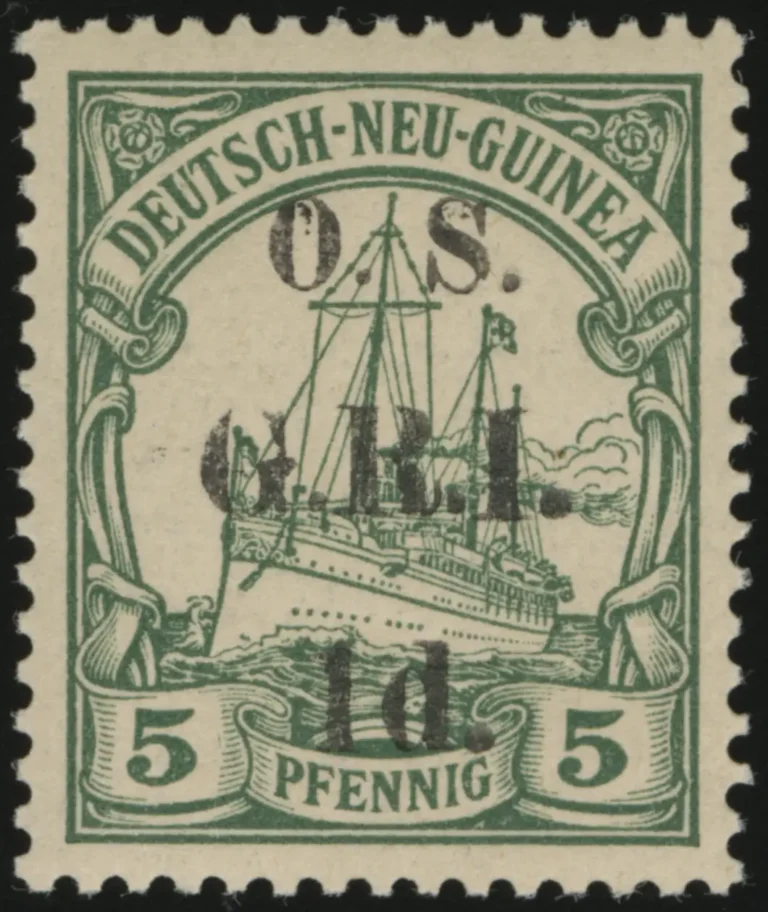
Unlike the German colonial issue, the British occupation issue included official stamps in two denominations: 1 d on 3 Pf and 1 d on 5 Pf (bottom right). These are distinguished from ordinary stamps by an additional overprint “OS” for “Official Service.”
In a related vein, stamps of Australia were also issued in the former German New Guinea beginning in 1915. These are overprinted “N.W. / Pacific / Islands” and were also used on Nauru before that island began to use distinct issues. All such stamps were replaced by stamps inscribed “Territory of New Guinea” once the League of Nations mandate commenced.
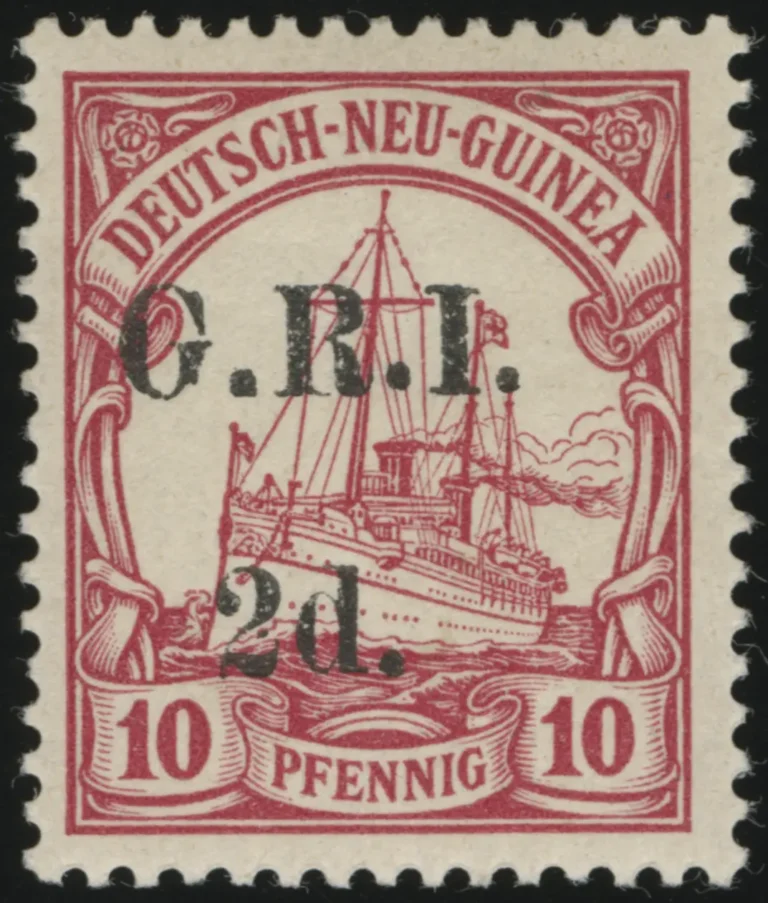
This island was where the majority of the population lived during the colonial period, and where the capital city of Rabaul was located.
Stamps of the occupation issue were created from all denominations of the unwatermarked German New Guinea issue, as well as from postal cards which were also captured by the British. Similarly overprinted stamps of the German Marshall Islands from the Nauru post office were similarly overprinted and placed in use on New Britain. Unlike the German colonial issue, the British occupation issue included official stamps in two denominations: 1 d on 3 Pf and 1 d on 5 Pf (below). These are distinguished from ordinary stamps by an additional overprint “OS” for “Official Service.”
In a related vein, stamps of Australia were also issued in the former German New Guinea beginning in 1915. These are overprinted “N.W. / Pacific / Islands” and were also used on Nauru before that island began to use distinct issues. All such stamps were replaced by stamps inscribed “Territory of New Guinea” once the League of Nations mandate commenced.
Post Offices & Postmarks
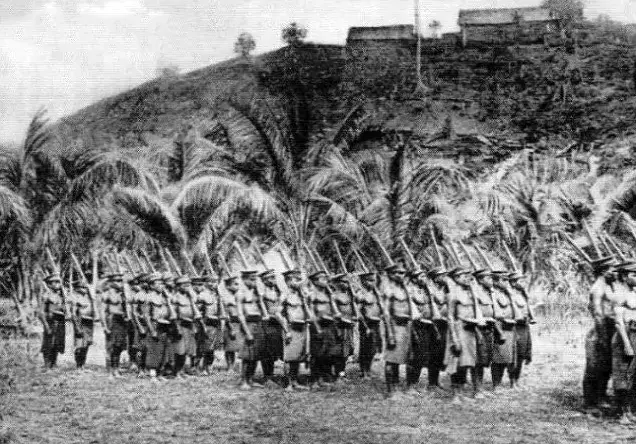
The majority of the German New Guinea post offices were located in towns on the islands of the Bismarck Archipelago. Those that were located on the New Guinea mainland were all located on the coast of the island. For this reason, many of the town names end in -hafen to indicate that they were a harbor of some sort.
With regard to place names, German New Guinea followed a policy unlike those of her contemporaries. The others tended to use a mix of European and indigenous place names when settlement began. Once a place was known by a given name, if the name were to change, it tended to be by the succeeding, non-German colonial administration or perhaps by the independent nation that succeeded the colony. In German New Guinea, initial place names were nearly all European—but many were in the process of being changed back to whatever their indigenous name had previously been. This process, which began c. 1912, was not complete when the war broke out. Some postal cancels changed names to reflect this. A very few place names of German origin actually do continue to be used in modern Papua New Guinea.
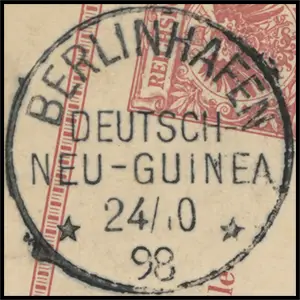
The number of post offices in German New Guinea was noticeably lower than the number of postmarks known from the colony. The reason for this is that one office occasionally operated at different times with different names. Berlinhafen, for example, became Eitape in 1912. Another example would be the three post offices of Matupi, Simpsonhafen, and Rabaul which were all essentially one post office with three different names at different points in time.
Berlinhafen

Buka

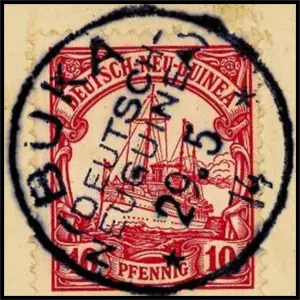
The island of Buka is near to the larger island of Bougainville, and was only officially a German possession from 1899. The post office here did not open until 1913. The Buka postmark is the rarest of the rare in German New Guinea; even GNG exhibits of it tend not to include on cover examples, due to the rarity of strikes of this cancel device.
The price of this cancel in the ArGe catalogue is “LP” for both on- and off cover strikes, which indicates something mostly bought by “connoisseurs” for whom price is no object. A quick survey of all the other cancels in ArGe shows only about three that are of similar rarity based on LP designations for on piece strikes as well as cover, with only about a dozen more that have this designation only for covers.
The Buka cancel device did fall into Allied hands, and is known applied to occupation stamps issued by the British. Genuine uses therefore require expertization.
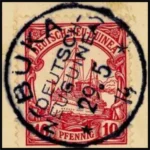
The island of Buka is near to the larger island of Bougainville, and was only officially a German possession from 1899. The post office here did not open until 1913. The Buka postmark is the rarest of the rare in German New Guinea; even GNG exhibits of it tend not to include on cover examples, due to the rarity of strikes of this cancel device.
The price of this cancel in the ArGe catalogue is “LP” for both on- and off cover strikes, which indicates something mostly bought by “connoisseurs” for whom price is no object. A quick survey of all the other cancels in ArGe shows only about three that are of similar rarity based on LP designations for on piece strikes as well as cover, with only about a dozen more that have this designation only for covers.
The Buka cancel device did fall into Allied hands, and is known applied to occupation stamps issued by the British. Genuine uses therefore require expertization.
Deulon
The post office at Deulon opened only in January of 1914, and was definitely closed no later than 29 September 1914. Genuine examples of the postmark are, therefore, quite scarce. This is particularly the case since only sporadic dates are known on cover.
This reflects the realities of life at Deulon. The primary reason this office opened in the first place was to serve a small missionary outpost in a previously untouched corner of Kaiser-Wilhelms-Land, located 12 miles / 19 km to the north of Friedrich-Wilhelmshafen. So the “post office” was a desk in the mission which operated only when one of the two German residents needed to mail something.
The exact fate of the Deulon postmark device is uncertain. Some sources say it was handed over first to the postmaster of Friederich-Wilhelmshafen, and then to the Australian occupation authorities. If this happened, no record of receipt by the Australians is known. In other cases, German civil administration property—including postal cancellers – was acknowledged by the occupation forces. Opportunity existed for the canceller to be transferred to German control later in the war, but there is no official record of that either. Ultimately, no one really knows what happened to it. The only surety in all of this was that many – possibly the majority – of the stamps cancelled with the Deulon postmark are dated between 20 and 29 September 1914.
Most of these strikes have features which suggest that the stamps were individually cancelled after being separated from their panes. By this, it means that only one, typically SON strike of the cancel is visible on any given stamp. Most German colonial issues were cancelled by such a cancel strike, but when stamps were cancelled in multiples for any reason, any part of the multiple shows portions of the cancels applied to adjacent stamps. This suggests that the stamps cancelled with the Deulon canceller with September 1914 dates were separated into individual stamps prior to being cancelled.
ArGe notes a much lower catalogue value for these dates, despite their being officially war dates, due to the uncertain provenance of the canceller. It is speculated that this was done to prevent unused stamps from falling into the hands of the occupiers.
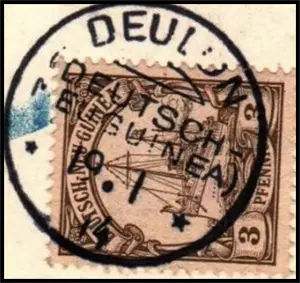
The post office at Deulon opened only in January of 1914, and was definitely closed no later than 29 September 1914. Genuine examples of the postmark are, therefore, quite scarce. This is particularly the case since only sporadic dates are known on cover.
This reflects the realities of life at Deulon. The primary reason this office opened in the first place was to serve a small missionary outpost in a previously untouched corner of Kaiser-Wilhelms-Land, located 12 miles / 19 km to the north of Friedrich-Wilhelmshafen. So the “post office” was a desk in the mission which operated only when one of the two German residents needed to mail something.
The exact fate of the Deulon postmark device is uncertain. Some sources say it was handed over first to the postmaster of Friederich-Wilhelmshafen, and then to the Australian occupation authorities. If this happened, no record of receipt by the Australians is known. In other cases, German civil administration property—including postal cancellers – was acknowledged by the occupation forces. Opportunity existed for the canceller to be transferred to German control later in the war, but there is no official record of that either. Ultimately, no one really knows what happened to it. The only surety in all of this was that many – possibly the majority – of the stamps cancelled with the Deulon postmark are dated between 20 and 29 September 1914.
Most of these strikes have features which suggest that the stamps were individually cancelled after being separated from their panes. By this, it means that only one, typically SON strike of the cancel is visible on any given stamp. Most German colonial issues were cancelled by such a cancel strike, but when stamps were cancelled in multiples for any reason, any part of the multiple shows portions of the cancels applied to adjacent stamps. This suggests that the stamps cancelled with the Deulon canceller with September 1914 dates were separated into individual stamps prior to being cancelled.
ArGe notes a much lower catalogue value for these dates, despite their being officially war dates, due to the uncertain provenance of the canceller. It is speculated that this was done to prevent unused stamps from falling into the hands of the occupiers.
Eitape
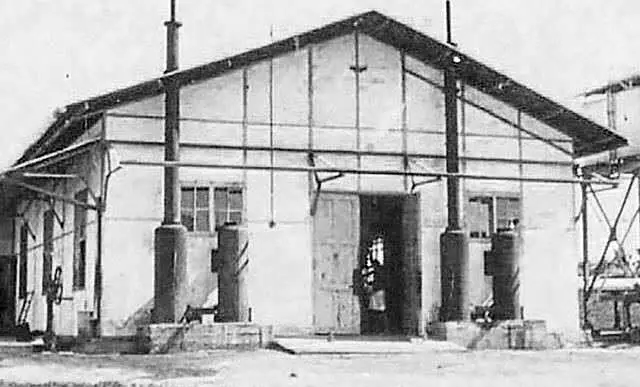
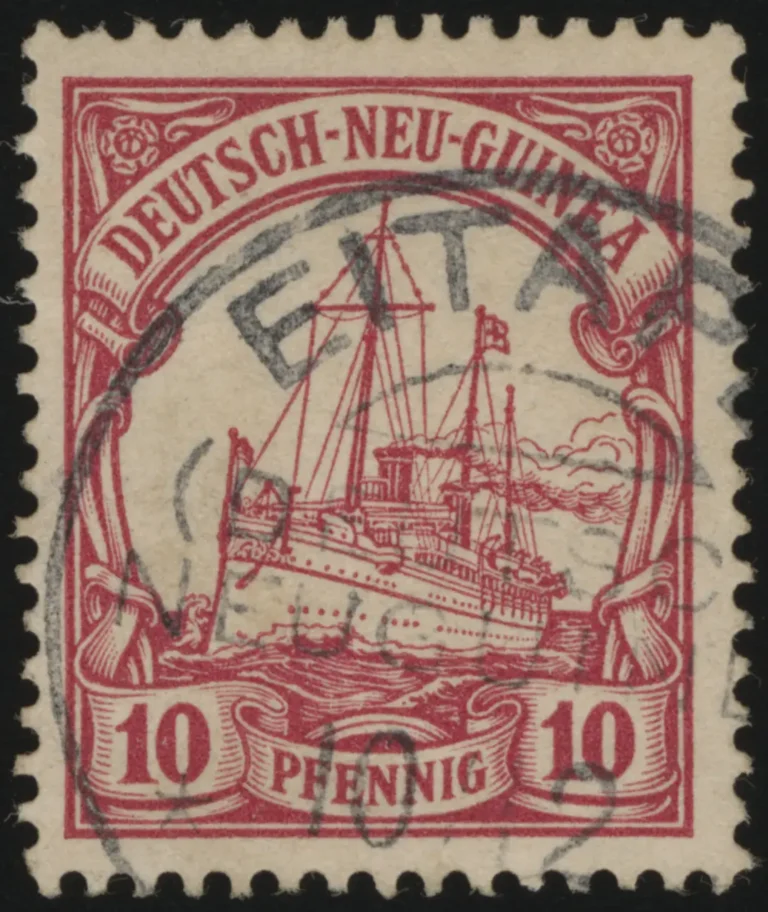
Eitape, formerly Berlinhafen, is located in the far north of Kaiser-Wilhelms-Land, and was the closest outpost of German postal control to the borders of Dutch New Guinea.
The name Eitape was used beginning in October of 1912, and continued through to 1914. At some time in the years since the First World War, the spelling of the name was changed slightly to “Aitape”. The modern town has about 18,000 residents. Stamps bearing the Eitape / DNG cancel are significantly fewer than those cancelled “Berlinhafen” owing to the very short period when the town had this name.
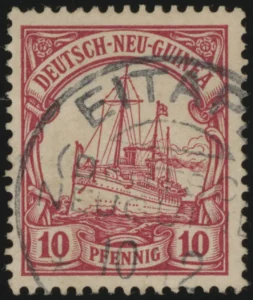
Eitape, formerly Berlinhafen, is located in the far north of Kaiser-Wilhelms-Land, and was the closest outpost of German postal control to the borders of Dutch New Guinea.
The name Eitape was used beginning in October of 1912, and continued through to 1914. At some time in the years since the First World War, the spelling of the name was changed slightly to “Aitape”. The modern town has about 18,000 residents. Stamps bearing the Eitape / DNG cancel are significantly fewer than those cancelled “Berlinhafen” owing to the very short period when the town had this name.
Finschhafen

The town of Finschhafen was settled by the Germans in 1884 when they first started to colonize German New Guinea. Perhaps because there was no indigenous settlement here to have a prior name, the modern town retains the German name. Finschhafen is located in Morobe province of Papua New Guinea, near the former border with British New Guinea. It was also the site of a US Naval base during the Second World War.
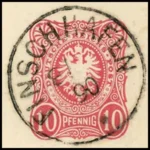
Collectors of postmarks will note that two different postmarks bear the name “Finschhafen” but their uses are separated by a number of years. The first type of postmark is only known on Vorläufer examples with dates from February 1888 to October 1891 (top right).
The post office here closed during a malaria outbreak in mid-March of 1891. The canceller was sent to nearby Stephansort, where it was used until October. The area was abandoned by the Germans for several years. German settlement resumed in 1901, although postal facilities with a cancel device did not return until July 1904.
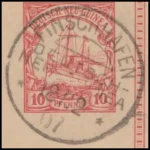
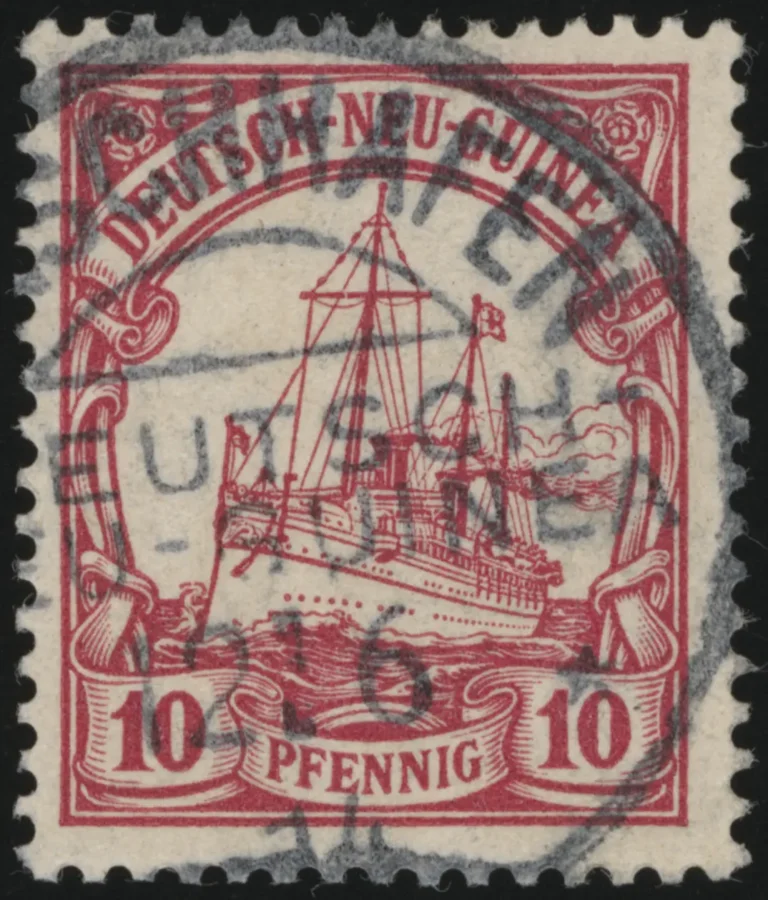
This second device, which is clearly identifiable as it incorporates the words “Deutsch- / Neu-Guinea”, was used until December 1914 (bottom right). Finschhafen was one of the offices which continued to operate under the Australian occupation.
The town of Finschhafen was settled by the Germans in 1884 when they first started to colonize German New Guinea. Perhaps because there was no indigenous settlement here to have a prior name, the modern town retains the German name. Finschhafen is located in Morobe province of Papua New Guinea, near the former border with British New Guinea. It was also the site of a US Naval base during the Second World War.
Collectors of postmarks will note that two different postmarks bear the name “Finschhafen” but their uses are separated by a number of years. The first type of postmark is only known on Vorläufer examples with dates from February 1888 to October 1891 (below).
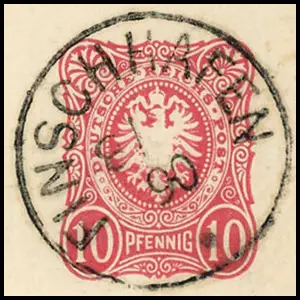
The post office here closed during a malaria outbreak in mid-March of 1891. The canceller was sent to nearby Stephansort, where it was used until October. The area was abandoned by the Germans for several years. German settlement resumed in 1901, although postal facilities with a cancel device did not return until July 1904.
This second device, which is clearly identifiable as it incorporates the words “Deutsch- / Neu-Guinea”, was used until December 1914 (below). Finschhafen was one of the offices which continued to operate under the Australian occupation.
Friedrich-Wilhelmshafen

Friedrich-Wilhelmshafen was one of the earlier post offices opened by the Germans, with operations commencing in 1892. This town was a regional center, and was officially the colonial capital when it opened – but this was largely in name only. This area was prone to malaria, which was ultimately the reason why many German commercial ventures in this town ultimately failed. The colonial administrator refused to move here, and stayed at Stephansort 18 miles / 23 km away. The two towns would ultimately be connected by a narrow gauge railway described as an “ox-driven railway” in some sources.
Despite its malaria ridden environs, Friedrich-Wilhelmshafen did, by about 1900, begin to succeed economically and even eclipsed Stephansort in importance. For this reason, examples of its postmark are relatively common.
The town today is known by the indigenous name of Madang, and is the capital of the province of the same name. The modern population is about 24,000.
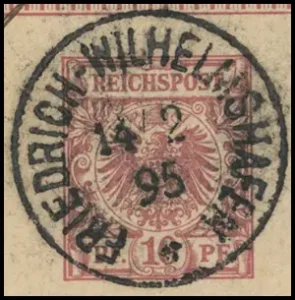
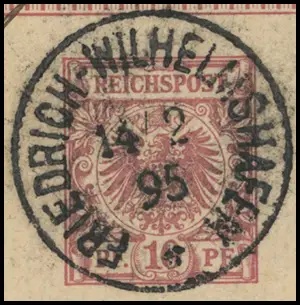
Friedrich-Wilhelmshafen was one of the earlier post offices opened by the Germans, with operations commencing in 1892. This town was a regional center, and was officially the colonial capital when it opened – but this was largely in name only. This area was prone to malaria, which was ultimately the reason why many German commercial ventures in this town ultimately failed. The colonial administrator refused to move here, and stayed at Stephansort 18 miles / 23 km away. The two towns would ultimately be connected by a narrow gauge railway described as an “ox-driven railway” in some sources.
Despite its malaria ridden environs, Friedrich-Wilhelmshafen did, by about 1900, begin to succeed economically and even eclipsed Stephansort in importance. For this reason, examples of its postmark are relatively common.
The town today is known by the indigenous name of Madang, and is the capital of the province of the same name. The modern population is about 24,000.
Hadtzfeldthafen
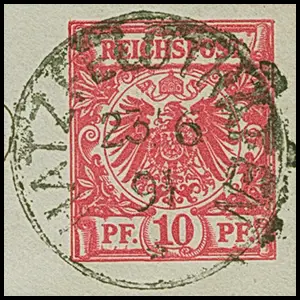
This town was originally named “Samoahafen” when it was founded by the German colonizers. This is another place in Papua New Guinea which is still known by its subsequent colonial name of Hatzfeldthafen, and is thought to have been named after German diplomat Paul von Hatzfeldt zu Wildenburg.
Although it was among the first German post offices to open in New Guinea in February 1888, Hatzfeldthafen itself was never of great importance to the Germans. By 30 September 1891, Hatzfeldthafen was one of four post offices in close proximity to each other, with the others being Friedrich-Wilhelmshafen, Konstantinhafen, and Stephansort. Konstantinhafen and Hatzfeldthafen both closed, leaving only the other two still in operation. The Hatzfeldthafen cancel is one of the rarer ones in German New Guinea philately.
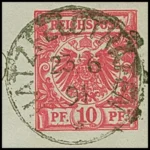
This town was originally named “Samoahafen” when it was founded by the German colonizers. This is another place in Papua New Guinea which is still known by its subsequent colonial name of Hatzfeldthafen, and is thought to have been named after German diplomat Paul von Hatzfeldt zu Wildenburg.
Although it was among the first German post offices to open in New Guinea in February 1888, Hatzfeldthafen itself was never of great importance to the Germans. By 30 September 1891, Hatzfeldthafen was one of four post offices in close proximity to each other, with the others being Friedrich-Wilhelmshafen, Konstantinhafen, and Stephansort. Konstantinhafen and Hatzfeldthafen both closed, leaving only the other two still in operation. The Hatzfeldthafen cancel is one of the rarer ones in German New Guinea philately.
Herbertshöhe

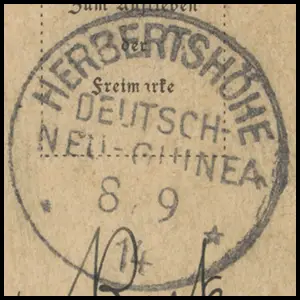
Herbertshöhe – which appears as “Herbertshöh” on earlier cancels and “Herbertshöhe” on later ones, was named “Herbert’s Heights” in honor of the eldest son of Otto von Bismarck. This is somewhat ironic, since Germany’s Iron Chancellor initially opposed the establishment of a German colonial empire.
Located a few miles inland from the coast in the eastern part of the island of New Britain (Neupommern in the German period), Herbertshöhe became the capital of German New Guinea in 1899 when the colonial administration moved here from Friedrich-Wilhelmshafen. It remained the capital until 1910, when the administration was moved again to Rabaul, located 19 miles / 29 km to the north and west. Now known as Kokopo, the town has been the capital of the modern province of East New Britain since 1994.
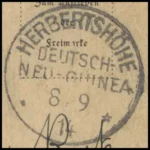
Herbertshöhe – which appears as “Herbertshöh” on earlier cancels and “Herbertshöhe” on later ones, was named “Herbert’s Heights” in honor of the eldest son of Otto von Bismarck. This is somewhat ironic, since Germany’s Iron Chancellor initially opposed the establishment of a German colonial empire.
Located a few miles inland from the coast in the eastern part of the island of New Britain (Neupommern in the German period), Herbertshöhe became the capital of German New Guinea in 1899 when the colonial administration moved here from Friedrich-Wilhelmshafen. It remained the capital until 1910, when the administration was moved again to Rabaul, located 19 miles / 29 km to the north and west. Now known as Kokopo, the town has been the capital of the modern province of East New Britain since 1994.
Kaewieng

Sometimes shown on maps as “Käwieng”, this was a small town of perhaps 80 residents in colonial times. The town was founded by the Germans in the early 1900’s, and had a post office from 1 January 1904. Kaewieng is located at the northern tip of the island of New Ireland (Neumecklenburg). It has evolved into the main port for New Ireland, and has about 18,000 residents today.
Kaewieng’s post office continued in operation for about three weeks following the German surrender. War dates are known until 17 October 1914.
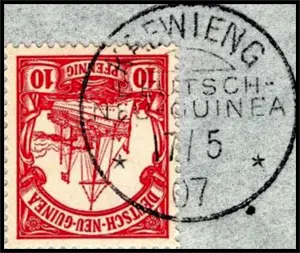
Sometimes shown on maps as “Käwieng”, this was a small town of perhaps 80 residents in colonial times. The town was founded by the Germans in the early 1900’s, and had a post office from 1 January 1904. Kaewieng is located at the northern tip of the island of New Ireland (Neumecklenburg). It has evolved into the main port for New Ireland, and has about 18,000 residents today.
Kaewieng’s post office continued in operation for about three weeks following the German surrender. War dates are known until 17 October 1914.
Kerawara

Kerawara is a tiny (0.18 mi2 / 0.45 km2) island in the Duke of York Islands (Neulauenburg in the German period), which are located off the coast of New Britain. In terms of area, this island is roughly the size of the Vatican City, the world’s smallest independent country.
The reason it had a post office at all was that Kerawara was the location of the colonial headquarters of the Neu Guinea Kompagnie. The company headquarters, and the Kerawara post office, remained operational until the company’s operations were moved to Herbertshöhe in 1890. The Kerawara cancel device was used on Kerawara until June 1890, but was then used in Herbertshöhe from then until January 1891 when a canceller reading “Herbertshöh” was received and placed in use.
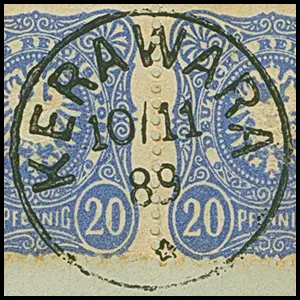
Kerawara is a tiny (0.18 mi2 / 0.45 km2) island in the Duke of York Islands (Neulauenburg in the German period), which are located off the coast of New Britain. In terms of area, this island is roughly the size of the Vatican City, the world’s smallest independent country.
The reason it had a post office at all was that Kerawara was the location of the colonial headquarters of the Neu Guinea Kompagnie. The company headquarters, and the Kerawara post office, remained operational until the company’s operations were moved to Herbertshöhe in 1890. The Kerawara cancel device was used on Kerawara until June 1890, but was then used in Herbertshöhe from then until January 1891 when a canceller reading “Herbertshöh” was received and placed in use.
Kieta

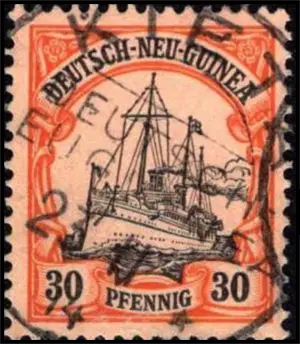
Kieta is the port town on the eastern side of Bougainville Island, located in the eastern-most portion of German New Guinea. The island of Bougainville only came under German control officially in 1899, with the signing of the treaties with the UK and the US. Postal facilities followed in April 1907. The Kieta post office was one of the post offices that continued in operation after the German surrender in September 1914. Dated examples of the cancel are known until December of that year (right).
Modern Kieta has been greatly affected by the Bougainville Civil War, which claimed 15,000 lives (about 5% of the population) between 1988 and 1998. This civil war was fought between the central government of Papua New Guinea and Bougainville islanders who wanted (and continue to seek) independence. The modern town of Kieta was largely destroyed in 1990 as a consequence of the violence.
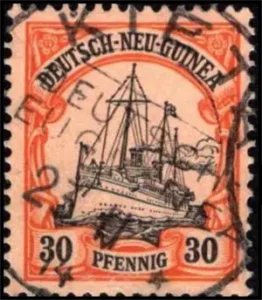
Kieta is the port town on the eastern side of Bougainville Island, located in the eastern-most portion of German New Guinea. The island of Bougainville only came under German control officially in 1899, with the signing of the treaties with the UK and the US. Postal facilities followed in April 1907. The Kieta post office was one of the post offices that continued in operation after the German surrender in September 1914. Dated examples of the cancel are known until December of that year (below).
Modern Kieta has been greatly affected by the Bougainville Civil War, which claimed 15,000 lives (about 5% of the population) between 1988 and 1998. This civil war was fought between the central government of Papua New Guinea and Bougainville islanders who wanted (and continue to seek) independence. The modern town of Kieta was largely destroyed in 1990 as a consequence of the violence.
Konstantinhafen
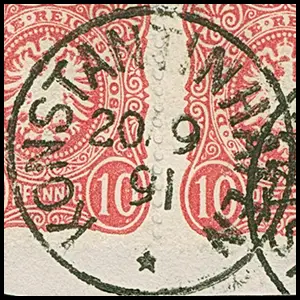
Konstantinhafen post office was one of the first opened in German New Guinea, commencing operations in February 1888. It was also one of the first offices closed due to lack of demand for postal services, as there were three other offices in the general area. For that reason, this office and Hatzfeldthafen both closed. The Konstantinhafen cancel is one of the great rarities of New Guinea’s Vorläufer period, although is slightly easier to find than Hatzfeldhafen.
Now known as “Erimba”, the area of the German settlement at Konstantinhafen was first visited by Europeans in 1871, when the Russian ship Vityas anchored here. The Russians named the area “Konstantinhafen” after Russian royal family member Konstantin Nikolayevich Romanov, who was the Russian viceroy in Poland at the time. Although it was linked to Stephansort and the towns around it by the rail network built by the Germans, it never became more than an “experimental plantation” which never took off in importance during the colonial period or afterwards.
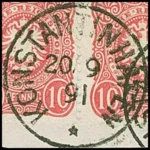
Konstantinhafen post office was one of the first opened in German New Guinea, commencing operations in February 1888. It was also one of the first offices closed due to lack of demand for postal services, as there were three other offices in the general area. For that reason, this office and Hatzfeldthafen both closed. The Konstantinhafen cancel is one of the great rarities of New Guinea’s Vorläufer period, although is slightly easier to find than Hatzfeldhafen.
Now known as “Erimba”, the area of the German settlement at Konstantinhafen was first visited by Europeans in 1871, when the Russian ship Vityas anchored here. The Russians named the area “Konstantinhafen” after Russian royal family member Konstantin Nikolayevich Romanov, who was the Russian viceroy in Poland at the time. Although it was linked to Stephansort and the towns around it by the rail network built by the Germans, it never became more than an “experimental plantation” which never took off in importance during the colonial period or afterwards.
Manus

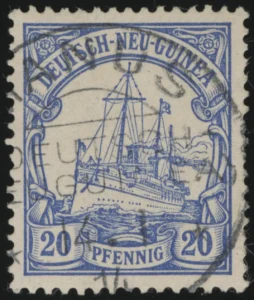
Manus is the largest island in the Admiralty Islands province of Papua New Guinea. The Admiralty Islands are located to the north and west of New Britain, directly north of the New Guinea mainland.
Manus is also home to Lorengau, the capital of Papua New Guinea’s Manus province. Despite an area of 810 mi2 / 2,100 km2, which is roughly the size of the Hawaiian island of Maui, the island today only has a population of about 30,000.
German Manus hosted a post office only from 1912, when the colony tried to settle a plantation on the island. Manus was remote enough that the post office did manage to continue operations until December 1914, roughly two months after the end of German administration.
Manus is the largest island in the Admiralty Islands province of Papua New Guinea. The Admiralty Islands are located to the north and west of New Britain, directly north of the New Guinea mainland.
Manus is also home to Lorengau, the capital of Papua New Guinea’s Manus province. Despite an area of 810 mi2 / 2,100 km2, which is roughly the size of the Hawaiian island of Maui, the island today only has a population of about 30,000.
German Manus hosted a post office only from 1912, when the colony tried to settle a plantation on the island. Manus was remote enough that the post office did manage to continue operations until December 1914, roughly two months after the end of German administration.
Maron

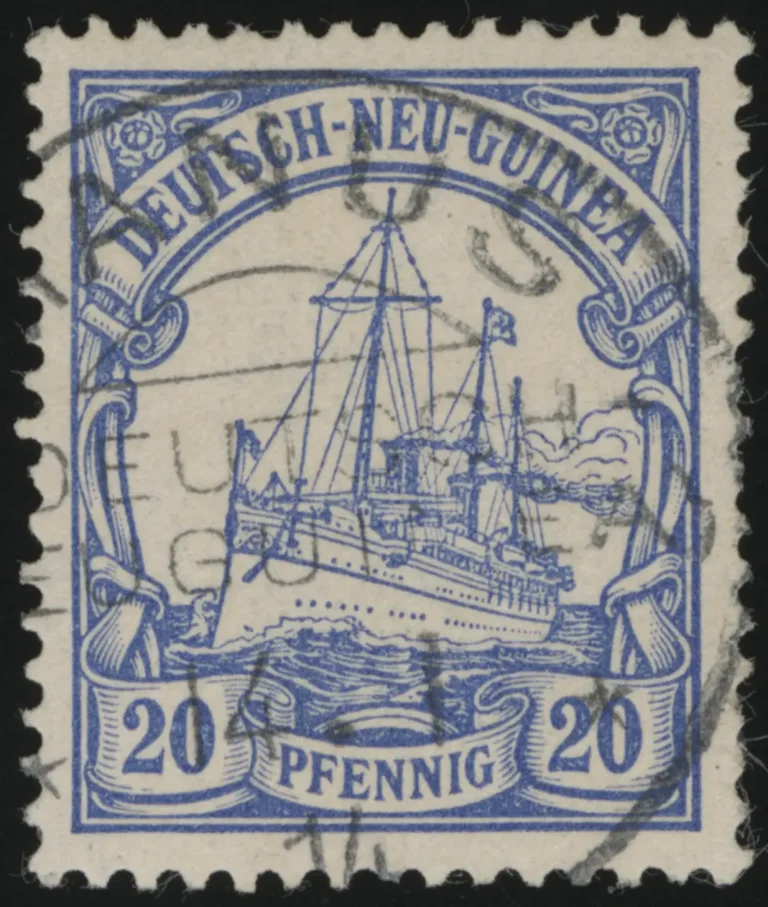
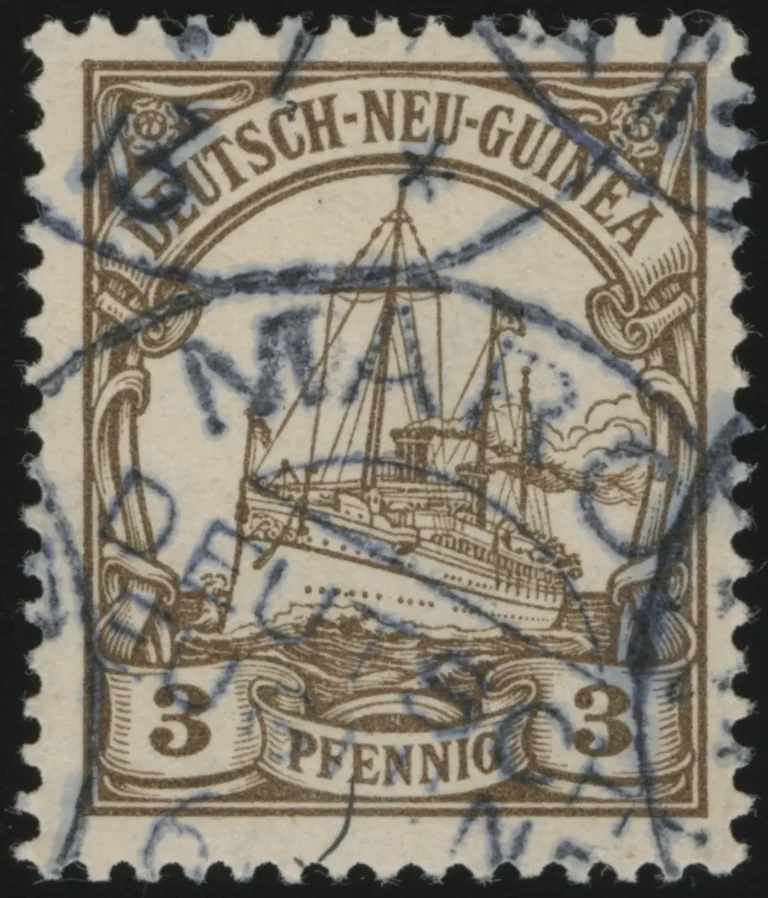
Maron is a very small island located within Manus province but in the Hermit Islands located to the west of Manus island. What the Germans were trying to do here is unclear, and very little information about Maron can be located. The Hermit Islands as a whole consist of 17 islands and islets, but have a collective population today of around 200.
The Maron post office opened in December 1910, and remained in operation until November 1914. The ArGe catalogue notes that examples of this cancel exist adjacent to the stamps with dates from 5 August 1914 – the word used is “nebengesetztem”. This usage is valued less than ordinary usages, and is not further explained.
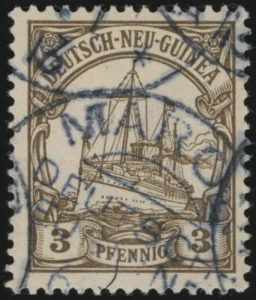
Maron is a very small island located within Manus province but in the Hermit Islands located to the west of Manus island. What the Germans were trying to do here is unclear, and very little information about Maron can be located. The Hermit Islands as a whole consist of 17 islands and islets, but have a collective population today of around 200.
The Maron post office opened in December 1910, and remained in operation until November 1914. The ArGe catalogue notes that examples of this cancel exist adjacent to the stamps with dates from 5 August 1914 – the word used is “nebengesetztem”. This usage is valued less than ordinary usages, and is not further explained.
Matupi

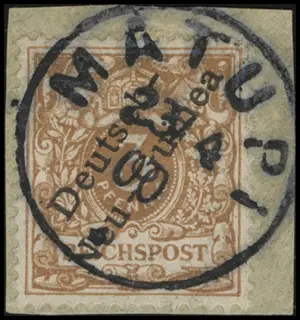
Now a peninsula, the Matupi place name applied to an island in the German colonial era located very close to the area which would become Simpsonhafen/Rabaul in the early 20th century.
Once Simpsonhafen was founded on the mainland of New Britain a few kilometers away, the postal facilities at Matupi quickly became superfluous. The post office here closed on 31 January 1906, and reopened at Simpsonhafen the next day.
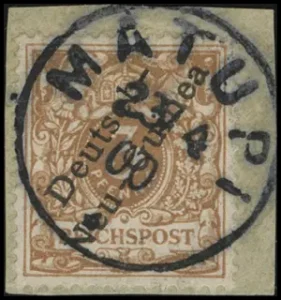
Now a peninsula, the Matupi place name applied to an island in the German colonial era located very close to the area which would become Simpsonhafen/Rabaul in the early 20th century.
Once Simpsonhafen was founded on the mainland of New Britain a few kilometers away, the postal facilities at Matupi quickly became superfluous. The post office here closed on 31 January 1906, and reopened at Simpsonhafen the next day.
Morobe
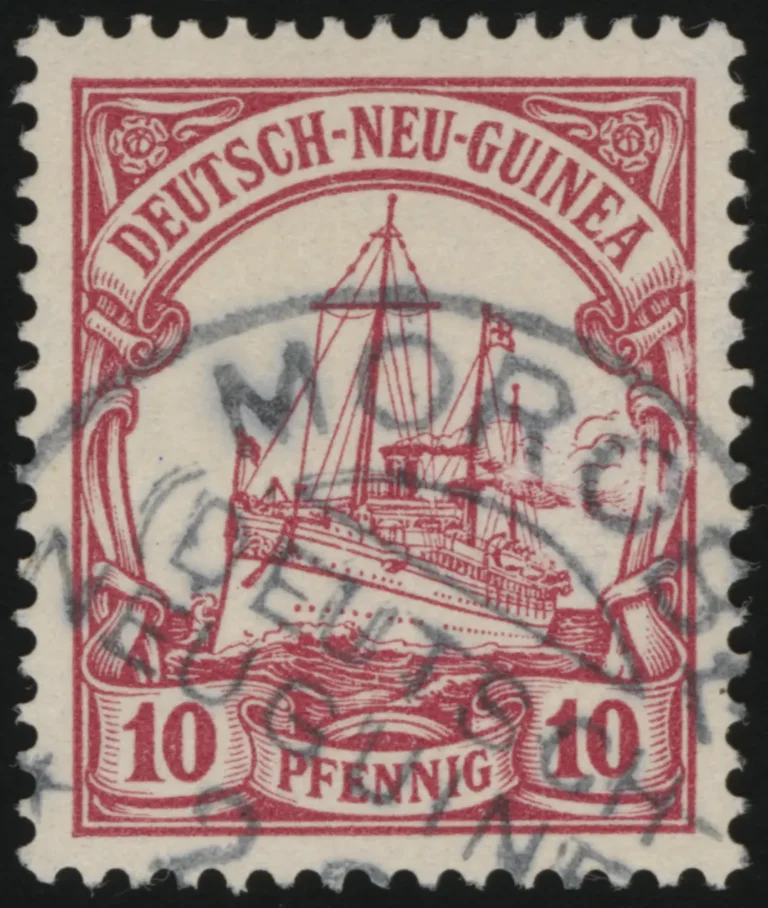
Presently a small coastal village, this town was a government outpost in German times that was located essentially on the frontier with British New Guinea. Shortly before the outbreak of the First World War, the colonial government appears to have been in the process of moving the government functions to the nearby area then known as Burgberg (now Lae), but the war intervened, and the move was not made at that time. Morobe is located in the modern, eponymous province of PNG, but was eclipsed by Lae decades ago in importance and size.
The German postal presence at Morobe only began on 15 January 1913, but the post office remained in operation for nearly two years until 11 January 1915. Along with the more famous Buka, Morobe is tied for the title of the latest use of a German cancel device in Australian-occupied New Guinea. Its short period of use makes Morobe a sought after cancel among marcophilatelists.
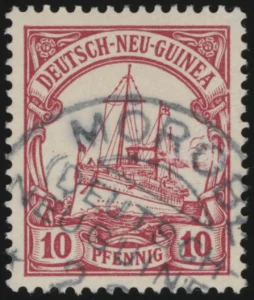
Presently a small coastal village, this town was a government outpost in German times that was located essentially on the frontier with British New Guinea. Shortly before the outbreak of the First World War, the colonial government appears to have been in the process of moving the government functions to the nearby area then known as Burgberg (now Lae), but the war intervened, and the move was not made at that time. Morobe is located in the modern, eponymous province of PNG, but was eclipsed by Lae decades ago in importance and size.
The German postal presence at Morobe only began on 15 January 1913, but the post office remained in operation for nearly two years until 11 January 1915. Along with the more famous Buka, Morobe is tied for the title of the latest use of a German cancel device in Australian-occupied New Guinea. Its short period of use makes Morobe a sought after cancel among marcophilatelists.
Namatanai

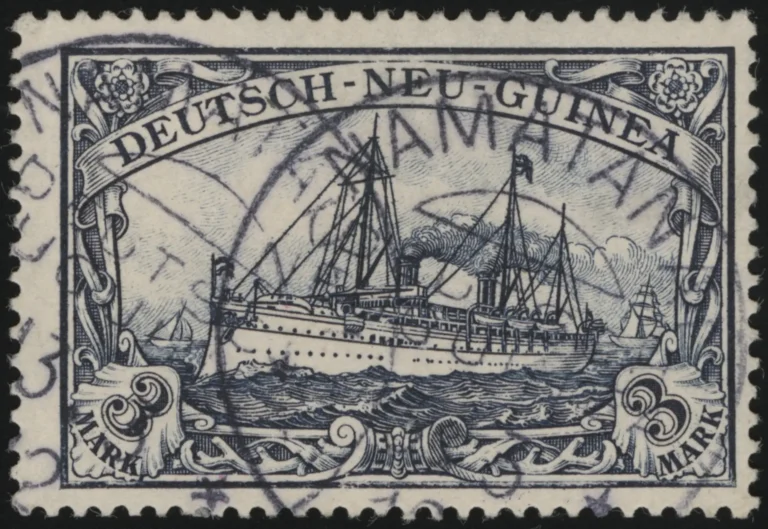
Namatanai (current population 1,600) is located approximately in the middle of the island of New Ireland, about 160 miles / 260 km to the southeast of the provincial capital of Kavieng.
German expansion into New Ireland did not occur to any great degree until late in the colonial period. The Namatanai post office did not open until December 1911. It remained in operation until November 1914, after the beginning of the Australian occupation.
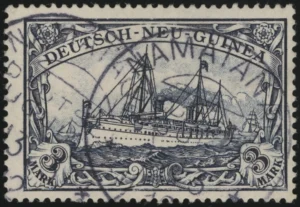
Namatanai (current population 1,600) is located approximately in the middle of the island of New Ireland, about 160 miles / 260 km to the southeast of the provincial capital of Kavieng.
German expansion into New Ireland did not occur to any great degree until late in the colonial period. The Namatanai post office did not open until December 1911. It remained in operation until November 1914, after the beginning of the Australian occupation.
Rabaul

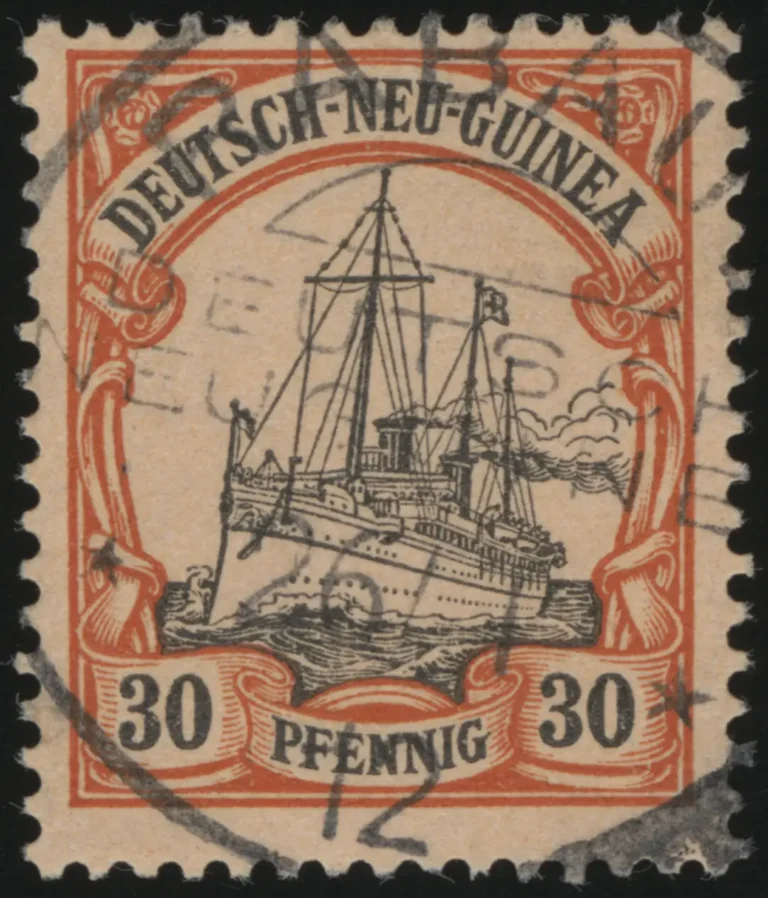
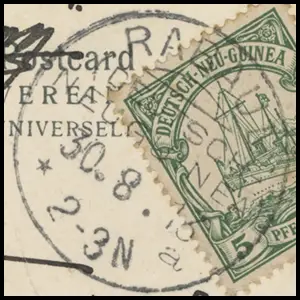
Rabaul, formerly Simpsonhafen, was the final colonial capital and seat of the government of German New Guinea. It became the capital in 1910, and remained the capital through the end of German control in 1914. Under Australian administration, Rabaul continued to serve as the capital of the Territory of New Guinea until a volcano destroyed the town in 1937.
Following the 1949 merging of Papua with New Guinea, Rabaul became the provincial capital of East New Britain Province despite being in a volcanically active area. When about 80% of the town was again destroyed by a 1994 volcanic eruption, the government functions of the provincial capital were transferred back to nearby Kokopo (formerly Herbertshöhe) where they had been located prior to 1910.
The cancel exists with no time stamp (top right), and, beginning in 1913, with a time stamp (bottom right).
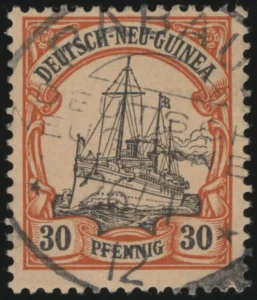
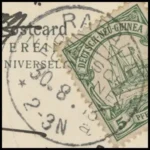
Rabaul, formerly Simpsonhafen, was the final colonial capital and seat of the government of German New Guinea. It became the capital in 1910, and remained the capital through the end of German control in 1914. Under Australian administration, Rabaul continued to serve as the capital of the Territory of New Guinea until a volcano destroyed the town in 1937.
Following the 1949 merging of Papua with New Guinea, Rabaul became the provincial capital of East New Britain Province despite being in a volcanically active area. When about 80% of the town was again destroyed by a 1994 volcanic eruption, the government functions of the provincial capital were transferred back to nearby Kokopo (formerly Herbertshöhe) where they had been located prior to 1910.
The cancel exists with no time stamp (below left), and, beginning in 1913, with a time stamp (below right).
Simpsonhafen

In 1899, the colonial government left malaria-ridden Friedrich-Wilhelmshafen behind and moved to Herbertshöhe on the island of New Britain, about 445 miles / 715 km across the ocean to the east.
However, Herbertshöhe, being located inland from the coast, did not have port facilities in the town. This was rectified when the government moved to Simpsonhafen, 18 miles / 29 km away but still on the same island.
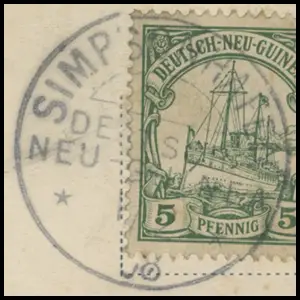
The post office here opened on 1 February 1906 after having been located at nearby Matupi since November 1894. The Simpsonhafen post office was renamed Rabaul on 1 April 1910, and it continued to be known by that name from that date forward.
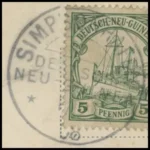
In 1899, the colonial government left malaria-ridden Friedrich-Wilhelmshafen behind and moved to Herbertshöhe on the island of New Britain, about 445 miles / 715 km across the ocean to the east.
However, Herbertshöhe, being located inland from the coast, did not have port facilities in the town. This was rectified when the government moved to Simpsonhafen, 18 miles / 29 km away but still on the same island.
The post office here opened on 1 February 1906 after having been located at nearby Matupi since November 1894. The Simpsonhafen post office was renamed Rabaul on 1 April 1910, and it continued to be known by that name from that date forward.
Stephansort

The port of Stephansort is the only place in German New Guinea which had a post office in colonial times, but which no longer exists. It is located in the northern part of what was Kaiser-Wilhelms-Land, with the closest extant village being Bogadjim. During the colonial period, Stephansort was connected with Friedrich-Wilhelmshafen and to plantations in the area by a narrow gauge railway. It was located near to towns, specifically Hatzfeldthafen and Konstantinhafen, which lost their postal facilities in 1891.
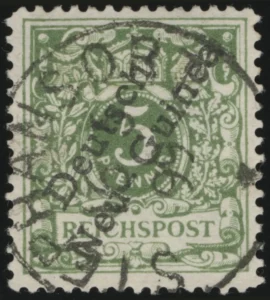
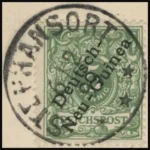
The post office at Stephansort was large enough that cancels from this office are relatively plentiful. Part of the reason for this was that tobacco and corn plantations located here were relatively successful and led to a noticeable amount of commercial mail. Two cancel devices are known, one placed in use in 1889 with one star at the bottom (top right), and the other in 1898 with three stars at the bottom (bottom right). Both were used fairly continuously until 1914.
The post office here closed just before the beginning of the First World War, on 30 June 1914. Although cancel devices from other colonial offices were destroyed by the German postal clerks, that was not the case here. Some sources state that the Stephansort cancellers were found in a functionary’s desk by the Australians.
Any notation of the town was removed from Australian maps after the war, and it essentially ceased to exist. The German-built infrastructure remained, however, until it was destroyed by the armed forces of Imperial Japan during the Second World War.
he port of Stephansort is the only place in German New Guinea which had a post office in colonial times, but which no longer exists. It is located in the northern part of what was Kaiser-Wilhelms-Land, with the closest extant village being Bogadjim. During the colonial period, Stephansort was connected with Friedrich-Wilhelmshafen and to plantations in the area by a narrow gauge railway. It was located near to towns, specifically Hatzfeldthafen and Konstantinhafen, which lost their postal facilities in 1891.
The post office at Stephansort was large enough that cancels from this office are relatively plentiful. Part of the reason for this was that tobacco and corn plantations located here were relatively successful and led to a noticeable amount of commercial mail. Two cancel devices are known, one placed in use in 1889 with one star at the bottom (below left), and the other in 1898 with three stars at the bottom (below right). Both were used fairly continuously until 1914.
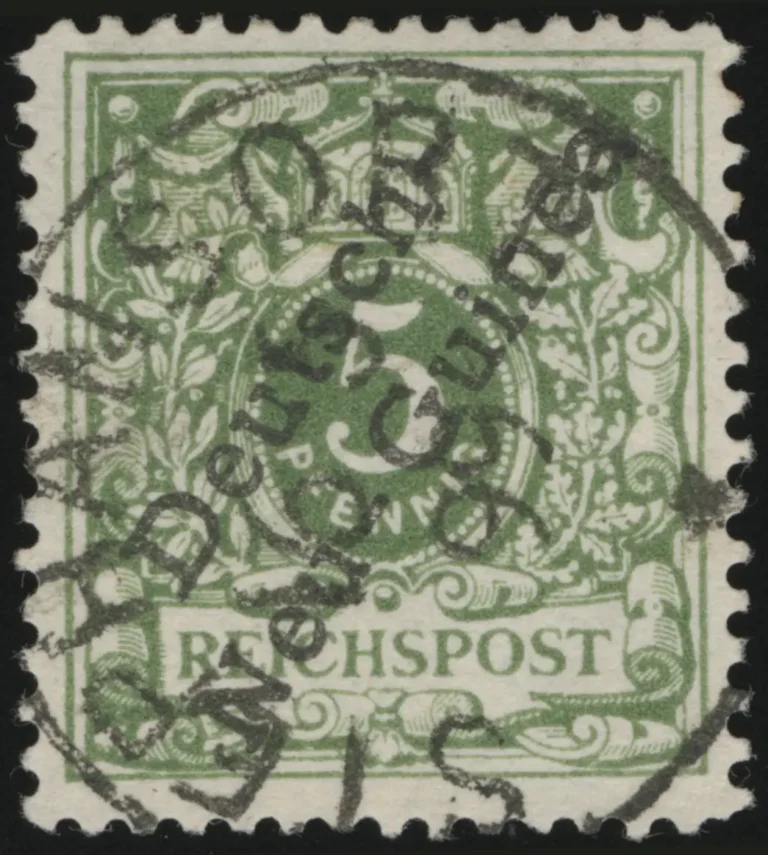
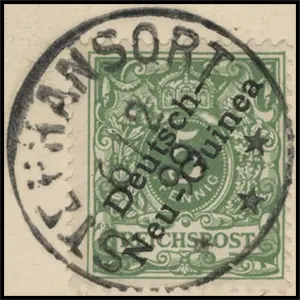
The post office here closed just before the beginning of the First World War, on 30 June 1914. Although cancel devices from other colonial offices were destroyed by the German postal clerks, that was not the case here. Some sources state that the Stephansort cancellers were found in a functionary’s desk by the Australians.
Any notation of the town was removed from Australian maps after the war, and it essentially ceased to exist. The German-built infrastructure remained, however, until it was destroyed by the armed forces of Imperial Japan during the Second World War.
References
Friedemann, A. (1980). The Stamps and Cancels of the German Colonies and the German Post Offices Abroad, Section XI Marshall Islands. Translated by Alfred K. Walter. Wilmington, DE: German Colonies Collector Group.
Michel Redaktion (ed.) (2025). Michel Germany Specialized Catalog 2025 (Part 1). Bobingen, Germany: Schwaneberger Verlag Gmbh.
Nössig, T. (ed.) (2019). Catalog of the Postmarks of the German Colonies & Post Offices Abroad (1st English ed). Berlin, Germany: Arbeitsgemeinschaft der Sammler deutscher Kolonialpostwertzeichen.
Illustrations courtesy of Jerry Miller, Jochen Vogenbeck, Oliver Wyrtki, Gannon Sugimura, & Jed Dorman.