Beginners Guide
Kamerun
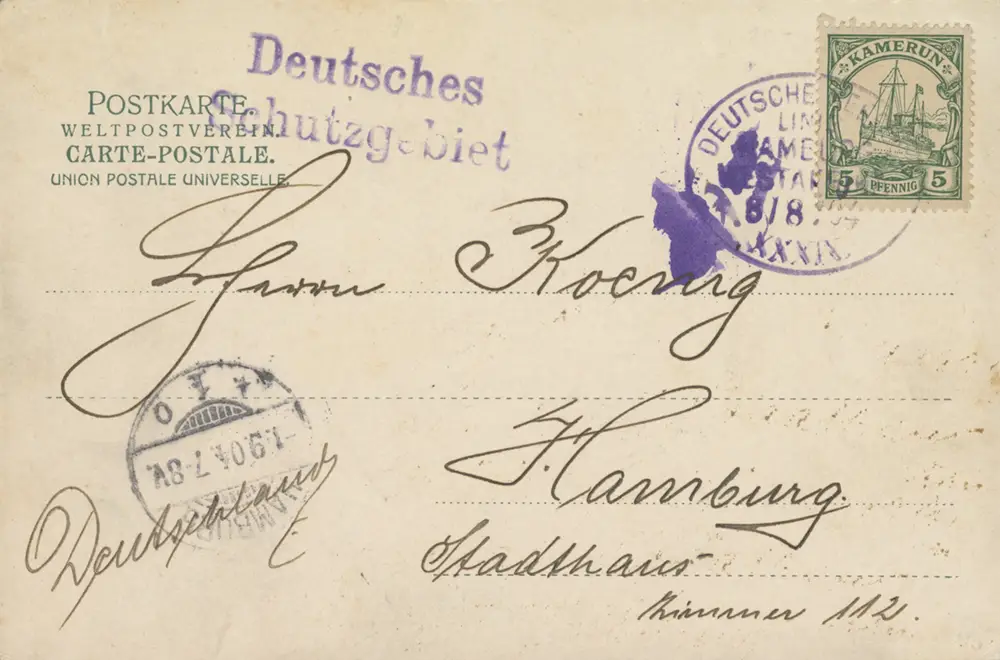
Postcard from Duala to Hamburg via steamer Adolph Woermann II, 8 August 1904
General

PO China
PO Morocco
PO Turkey
D-NG
D-OA
D-SWA
Kamerun
Karolinen

Kiautschou

Marianen

Marshall-In.
Samoa
Togo
Kamerun (Cameroon)
By Gannon Sugimura
Historical Background

In many ways, Germany’s colonial endeavor began in West Africa. Germany’s commercial presence in what would later become coastal Kamerun predated the foundation of the Empire itself, with the 1868 commercial establishments of the Hamburg firm of Carl Woermann. In deciding to set up offices in the area of the “Rio dos Camarões” or “River of Shrimp” in Portuguese (the source of the name “Cameroon”), German commercial offices predated the Empire itself by several years. Similar operations in other future colonies all came after 1868; only in Samoa did another Hamburg firm open a trading office at an earlier date.
Even so, once the Empire was officially established in 1871, Germany had no constitutional authority to establish colonies the way that Britain and France did. Even had there been such authority, Germany was a relatively poor country at this time, and was either incapable or unwilling to fund such colonial adventures. For this reason, the first “official” German colonies followed the same path as that followed in Kamerun. German firms would open offices to conduct trade with the locals in areas not already claimed by other European powers. While initially restricted to one town or port, the German companies would spread their influence as far and as fast as they were able to and by whatever means they could use, thus shutting out European competitors.
While the “commercial” model of colonization seemed to initially work, it was evident by the mid-1880’s that there would have to be some changes. First off, the scramble for Africa was continuing. By the time Germany wanted to implant her influence in Africa, other Europeans had claimed nearly everything. Only a short stretch of 225 miles / 360 km remained between British Nigeria and the Spanish Guinea. As it was, Germany declared Kamerun a German protectorate by raising the flag at Duala on 14 July 1884, beating a British representative intent on doing the same thing by just five days. Overlapping British and German claims took several years to resolve, but the German claim over this area had been staked.
In part because Germany had waited so long – the first Portuguese colonies in Africa were already on the order of 400 years old by this point – the only way to expand Kamerun in either size or importance would be to head inland. They did so with abandon, expanding the size of the colony quickly and immensely. Kamerun would thus become a textbook example of an African colony with odd geography. To put things in perspective, Kamerun in 1912 had 1/3 more area than Germany proper in the same year – but Germany had a coastline about twelve (12) times longer than Kamerun’s.
The other problem with using commercial firms as colonial agents lay with the limits such firms had, particularly with finances. Unlike in German East Africa, where a single firm established that colony, several firms were operating in Kamerun simultaneously, with differing degrees of success. The two primary firms in Kamerun, the Woermann firm and the firm of Jantzen & Thormählen, were finding it more and more difficult to operate in the midst of the advancing competition from other European powers. They pushed for being a colony, since that would provide the protection of the German crown. As trading companies, they did not have the means to defend their positions otherwise.
Neu Kamerun – Near the end of the existence of the colony, Kamerun would do what no other German colony would do again; it nearly doubled in size by annexing land from a rival. This land (right, in pink) would be taken from French Equatorial Africa in late 1911, fulfilling a German colonial objective to improve Kamerun’s access to international trade.
As early as 1907, the German colonial office had advocated for obtaining some of this land in order to obtain better access to the Congo River and the increased shipping capacity that entailed. The land so obtained was of questionable value in this regard; the controversy this inspired eventually led to the resignation of the colonial secretary.
In any event, the opportunity to obtain the French lands that would become “Neu Kamerun” presented itself in 1911, in an overlap with another German colonial entity in Morocco. In the run up to 1911, Germany was continually jockeying with Britain, France, and Spain for control in the still-nominally independent Kingdom of Morocco. In short, the German view was that France was choosing to send a large number of troops into the Moroccan interior as a threat to German interests; Germany sent warships to Morocco in response. This series of events, known as the “Agadir Crisis” was resolved by a treaty signed in late 1911, in which Germany accepted French control of most of Morocco in exchange for the 110,000 km² of French Equatorial Africa that it wanted to add to Kamerun. This expansion of Kamerun was to be short lived; the treaty was signed on 4 November 1911, approximately 2 ½ years before the outbreak of the First World War.
The treaty which ceded Neu Kamerun to Germany created a territorial anomaly that anyone looking at a 1911 map of Kamerun can easily see. The Spanish colony of Rio Muni was now surrounded on three sides by German territory, with only a very narrow strip of land separating Rio Muni from French Gabon. However, it should be noted that the Agadir crisis mentioned above also left Spain in uncontested control of the Spanish zone of Morocco in the north of the country. Germany began negotiations with Spain in 1912 to take control of the Spanish possessions in this part of Africa in compensation for having to forgo controlling any part of Morocco. These negotiations would ultimately come to nothing due to the First World War.
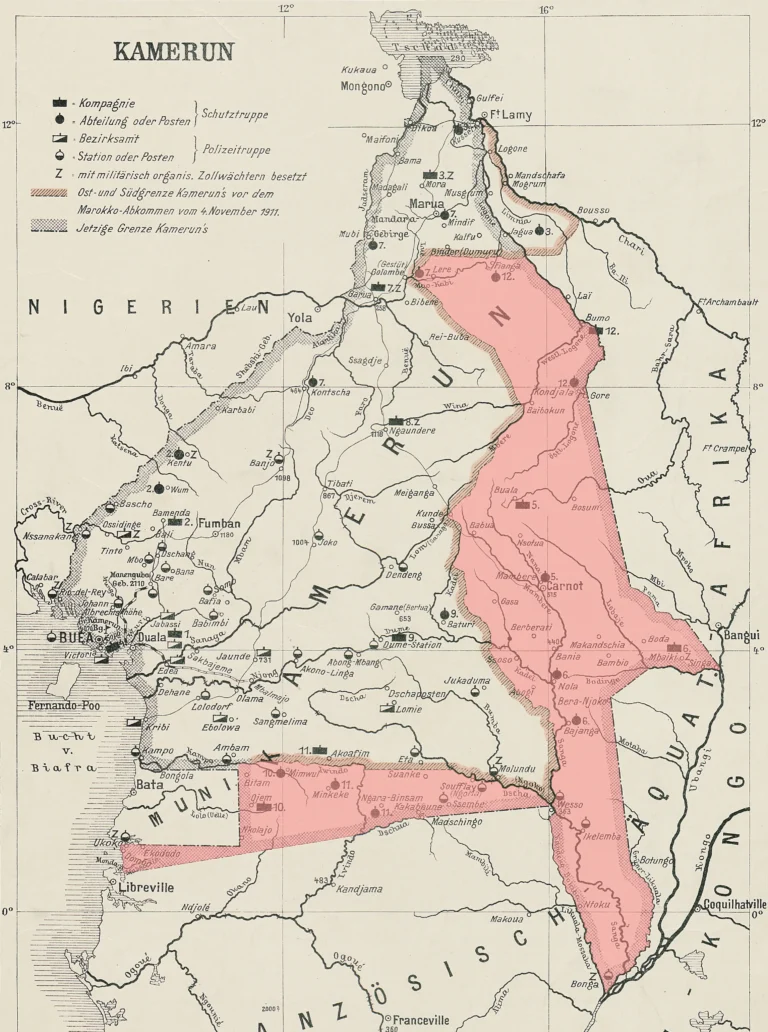
Neu Kamerun – Near the end of the existence of the colony, Kamerun would do what no other German colony would do again; it nearly doubled in size by annexing land from a rival. This land (right, in pink) would be taken from French Equatorial Africa in late 1911, fulfilling a German colonial objective to improve Kamerun’s access to international trade.
As early as 1907, the German colonial office had advocated for obtaining some of this land in order to obtain better access to the Congo River and the increased shipping capacity that entailed. The land so obtained was of questionable value in this regard; the controversy this inspired eventually led to the resignation of the colonial secretary.
In any event, the opportunity to obtain the French lands that would become “Neu Kamerun” presented itself in 1911, in an overlap with another German colonial entity in Morocco. In the run up to 1911, Germany was continually jockeying with Britain, France, and Spain for control in the still-nominally independent Kingdom of Morocco. In short, the German view was that France was choosing to send a large number of troops into the Moroccan interior as a threat to German interests; Germany sent warships to Morocco in response. This series of events, known as the “Agadir Crisis” was resolved by a treaty signed in late 1911, in which Germany accepted French control of most of Morocco in exchange for the 110,000 km² of French Equatorial Africa that it wanted to add to Kamerun. This expansion of Kamerun was to be short lived; the treaty was signed on 4 November 1911, approximately 2 ½ years before the outbreak of the First World War.
The treaty which ceded Neu Kamerun to Germany created a territorial anomaly that anyone looking at a 1911 map of Kamerun can easily see. The Spanish colony of Rio Muni was now surrounded on three sides by German territory, with only a very narrow strip of land separating Rio Muni from French Gabon. However, it should be noted that the Agadir crisis mentioned above also left Spain in uncontested control of the Spanish zone of Morocco in the north of the country. Germany began negotiations with Spain in 1912 to take control of the Spanish possessions in this part of Africa in compensation for having to forgo controlling any part of Morocco. These negotiations would ultimately come to nothing due to the First World War.
Vorläufer

Postal operations in Kamerun actually began during the “commercial colonization” period with mail being transported on the ships of the Woermann company, once those ships were officially designated as mail steamers in 1882. Early mail from this period should be collected as entires, if it can be obtained at all for reasons that will soon become apparent.
Until 1884, ships of the Woermann company which carried mail from west Africa to Germany were required to frank such mail with German stamps but did not cancel them. Instead, the mail was carried to Europe where it was given to specific post offices responsible for getting this mail into the system. As the OPD (Oberpostdirektion or “Supervisory Post Office”) in Hamburg was responsible for mail from Kamerun at this time, most such mail has postmarks from the Hamburg 1 post office.
The other option seen is mail with square box cancels reading “VERVIERS / (date) / COELN” (right) applied at Railroad Post Office No. 10 on the Köln-Verviers rail line. Mail with this cancel was generated by mail carried by Woermann ships which called at ports on the English Channel (e.g., Le Havre, Dieppe, etc.). Such mail was given to the railroads in these ports of call, which forwarded it to Railroad Post Office (RPO) #10 on the Köln-Verviers line. (Doing so would ultimately speed up its transit.) No postmarks of distinctly Kamerun origin would appear until 1887.
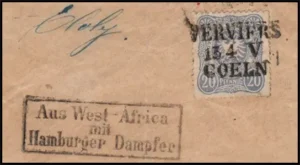
The other option seen is mail with square box cancels reading “VERVIERS / (date) / COELN” (below) applied at Railroad Post Office No. 10 on the Köln-Verviers rail line.
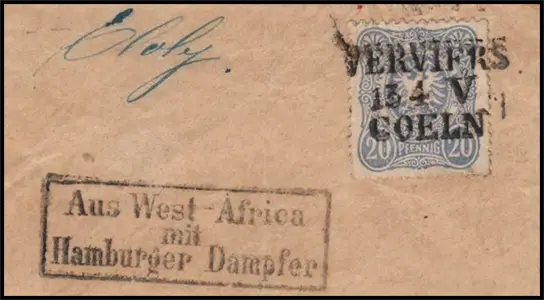
Mail with this cancel was generated by mail carried by Woermann ships which called at ports on the English Channel (e.g., Le Havre, Dieppe, etc.). Such mail was given to the railroads in these ports of call, which forwarded it to Railroad Post Office (RPO) #10 on the Köln-Verviers line. (Doing so would ultimately speed up its transit.) No postmarks of distinctly Kamerun origin would appear until 1887.
It should be noted that these cancel devices were NOT restricted to mail of Kamerun origin, so either on piece or on cover examples must show definitive Kamerun origins to be considered a Vorläufer. Additionally, many of these first items were actually sent stampless. The Hamburg OPD supplied only 20 marks worth of postage stamps at first, and each ship’s consignment of mail typically required much more postage than that.
This system, however, created some problems, particularly with mail deposited at train stations in the Channel ports. For reasons that are not entirely clear, but which appear to be related to some sort of abuses and/or loopholes in the system, the OPD Hamburg requested the Woermann personnel handling mail from Kamerun to write down – by hand and on each mail piece– the port where that item was given to the railways for forwarding from the middle of 1883. While doing so could have addressed postal concerns, it proved cumbersome and ineffective to carry out. These notations were sometimes illegible, and sometimes not made at all.
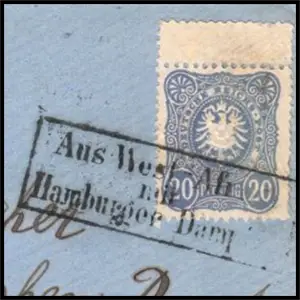
This situation led to the introduction, in mid-1884, of a marking which has since become firmly linked with mail from Kamerun – boxed postal markings reading “AUS WEST AFRIKA”. The first such marking was a three-line marking reading “Aus West-Africa / mit / Hamburger Dampfer” (top right), which was used at RPO #10. This cancel device was applied – apparently in error – to stamps initially, but was intended to be applied to the cover away from the stamps. Usage of this device continued until 1894 (and occasionally until 1898) even though the Woermann line stopped depositing mail at ports on the English Channel in 1886, and brought it instead only to Hamburg. Mail from this period still would officially be cancelled in Hamburg, but a new boxed marking reading “AUS / WESTAFRIKA” was also applied at Hamburg to ever increasing amounts of mail.
Additional cancels applied to German stamps with the phrase “Aus Westafrika” (bottom right) are also connected to Kamerun, and can occur in connection with the parcel post service run by Woermann between 1885 and 1893. Parcel post carried by Woermann was handled by the Hamburg 2 Post office, which applied a circular date stamp reading “Aus Westafrika / über Hamburg” in place of a town name to parcel post cards.
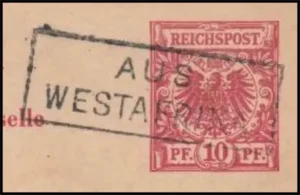
It should be noted that these cancel devices were NOT restricted to mail of Kamerun origin, so either on piece or on cover examples must show definitive Kamerun origins to be considered a Vorläufer. Additionally, many of these first items were actually sent stampless. The Hamburg OPD supplied only 20 marks worth of postage stamps at first, and each ship’s consignment of mail typically required much more postage than that.
This system, however, created some problems, particularly with mail deposited at train stations in the Channel ports. For reasons that are not entirely clear, but which appear to be related to some sort of abuses and/or loopholes in the system, the OPD Hamburg requested the Woermann personnel handling mail from Kamerun to write down – by hand and on each mail piece– the port where that item was given to the railways for forwarding from the middle of 1883. While doing so could have addressed postal concerns, it proved cumbersome and ineffective to carry out. These notations were sometimes illegible, and sometimes not made at all.
This situation led to the introduction, in mid-1884, of a marking which has since become firmly linked with mail from Kamerun – boxed postal markings reading “AUS WEST AFRIKA”. The first such marking was a three-line marking reading “Aus West-Africa / mit / Hamburger Dampfer” (below), which was used at RPO #10.
This cancel device was applied – apparently in error – to stamps initially, but was intended to be applied to the cover away from the stamps. Usage of this device continued until 1894 (and occasionally until 1898) even though the Woermann line stopped depositing mail at ports on the English Channel in 1886, and brought it instead only to Hamburg. Mail from this period still would officially be cancelled in Hamburg, but a new boxed marking reading “AUS / WESTAFRIKA” was also applied at Hamburg to ever increasing amounts of mail.
Additional cancels applied to German stamps with the phrase “Aus Westafrika” (below) are also connected to Kamerun, and can occur in connection with the parcel post service run by Woermann between 1885 and 1893.
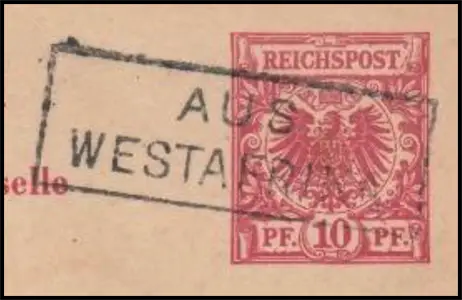
Parcel post carried by Woermann was handled by the Hamburg 2 Post office, which applied a circular date stamp reading “Aus Westafrika / über Hamburg” in place of a town name to parcel post cards.
The operations of the colonial branch of the Reichspost began in earnest on 1 February 1887. Kamerun can thus claim that it was the first colony to have any form of German postal facilities. On that date, Germany was operating post offices abroad in only three locations: Apia (opened 1886), Constantinopel (1870), and Shanghai (1886). (Note: Although Samoa would eventually become a German colony, that did not happen until 1900. In 1887, the post office in Apia was treated as a Kaiserlich Deutsche Postagentur like those in the other two cities rather than the colonial postal facility it would later become.)
The first colonial postal agency—not officially a post office until 1897 – was appropriately called “Kamerun” and opened on this first day, and generated a sizable chunk of all Kamerun Vorläufer (right). Other post offices which were open prior to the April 1897 issuance of distinct Kamerun stamps include Viktoria (opened 12 December 1888), Bibundi (5 July 1891), Gross-Batanga (1 March 1893), Kribi (10 August 1894), and Rio del Rey (9 January 1897).
Owing to their opening dates, Vorläufer cancels on the 1880 German definitive series must have been applied only at either Kamerun or Viktoria. Cancels from all of these offices can appear on Vorläufer from the 1889 series. Additionally, Mi. V37 (Vorläufer usages of the 2 Mark stamp first issued in 1875) can also occur with the cancel of the Buea post office, which opened on 15 February 1900.
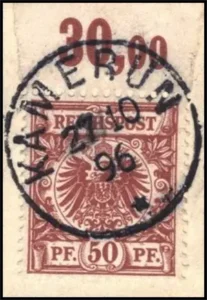
The operations of the colonial branch of the Reichspost began in earnest on 1 February 1887. Kamerun can thus claim that it was the first colony to have any form of German postal facilities. On that date, Germany was operating post offices abroad in only three locations: Apia (opened 1886), Constantinopel (1870), and Shanghai (1886). (Note: Although Samoa would eventually become a German colony, that did not happen until 1900. In 1887, the post office in Apia was treated as a Kaiserlich Deutsche Postagentur like those in the other two cities rather than the colonial postal facility it would later become.)
The first colonial postal agency—not officially a post office until 1897 – was appropriately called “Kamerun” and opened on this first day, and generated a sizable chunk of all Kamerun Vorläufer (below).
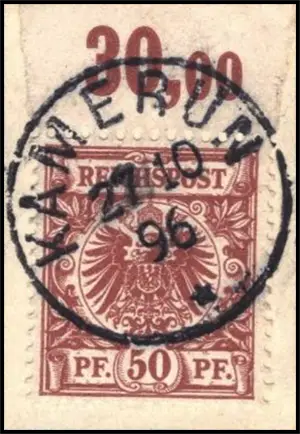
Other post offices which were open prior to the April 1897 issuance of distinct Kamerun stamps include Viktoria (opened 12 December 1888), Bibundi (5 July 1891), Gross-Batanga (1 March 1893), Kribi (10 August 1894), and Rio del Rey (9 January 1897).
Owing to their opening dates, Vorläufer cancels on the 1880 German definitive series must have been applied only at either Kamerun or Viktoria. Cancels from all of these offices can appear on Vorläufer from the 1889 series. Additionally, Mi. V37 (Vorläufer usages of the 2 Mark stamp first issued in 1875) can also occur with the cancel of the Buea post office, which opened on 15 February 1900.
Overprints

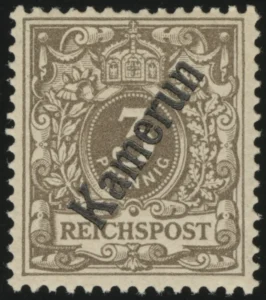
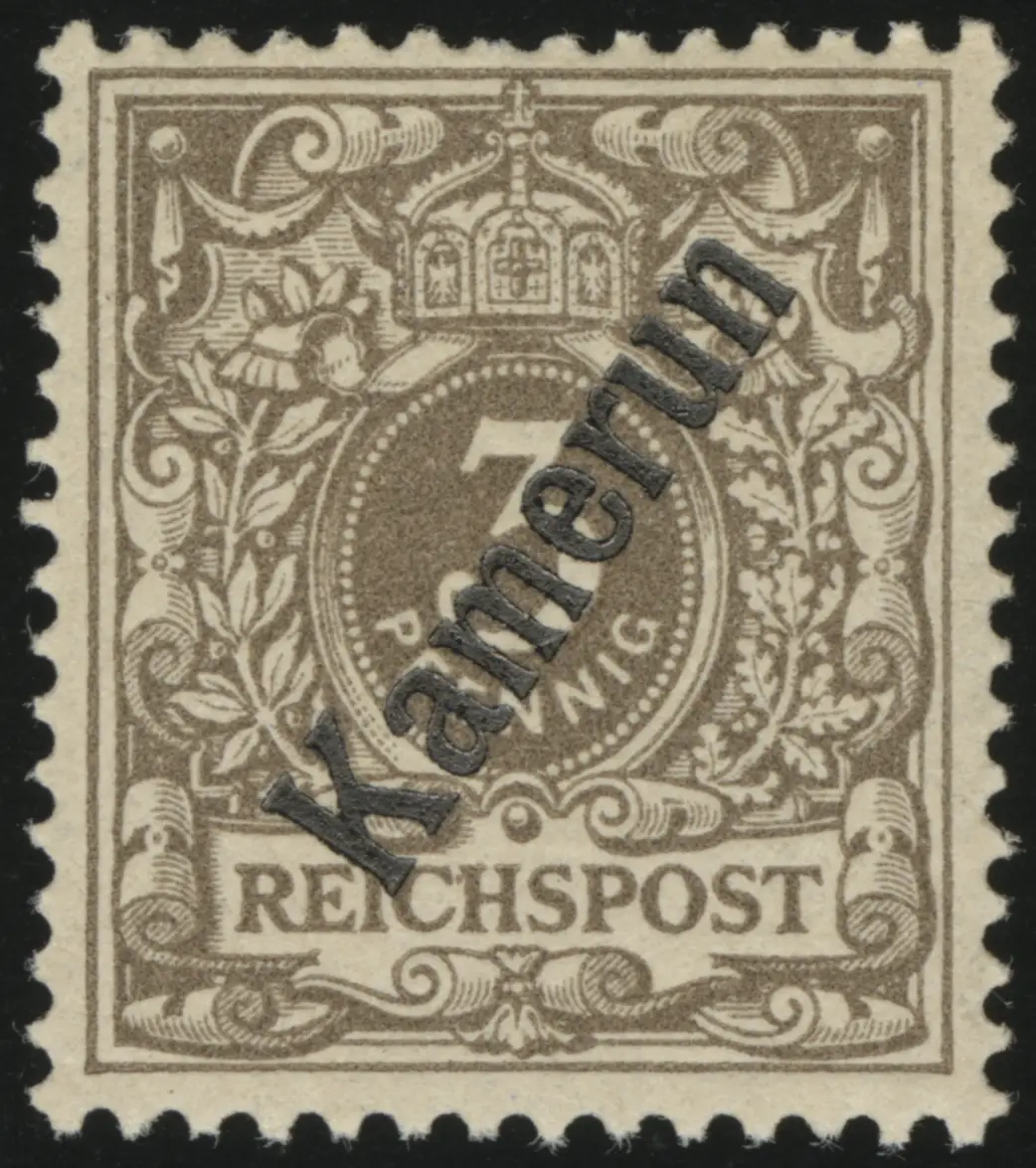
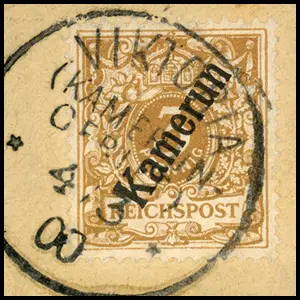
As was the case across the German Colonial Empire, distinctive colonial stamps were issued for Kamerun beginning with the issue of a new 10 Pf stamp in April 1897. By the end of 1897, Kamerun post offices would be supplied with overprinted examples of all six (6) values from the 1889 definitive series. All values consist of an otherwise ordinary German definitive with the word “KAMERUN” overprinted diagonally across the face of the stamp at approximately 56°.
Despite several values going through multiple printings, the angle of the overprint was never changed as long as this series was current. This overprint appears to have been applied very consistently, and with a little more attention paid to quality control. Unlike in other colonies, Michel does not note any varieties related to flaws involving the overprint. Indeed, the only overprint variety noted is a “stronger overprint” created in early 1897 on 800 sets of stamps sent as specimens to the Universal Postal Union – the “Bern” Issue (right).
Collectors of plate flaw varieties involving the underlying stamps typically will find little to collect in this issue. As is the case with most of the overprinted colonial issues, not all of the plate flaws noted for the 1889 series were present on stamps that received colonial overprints. Michel lists five in the case of Kamerun; in addition to the nearly universal break in the right scroll on the 3 Pf stamp, Michel notes a short foot on “P” in “PF.” on the 10 Pf, and on the 25 Pf, a split in the top of “I” of “Reichspost”, a damaged top right of the “I” in “Reuchspost”, and a colored dot next to the lower left scroll.
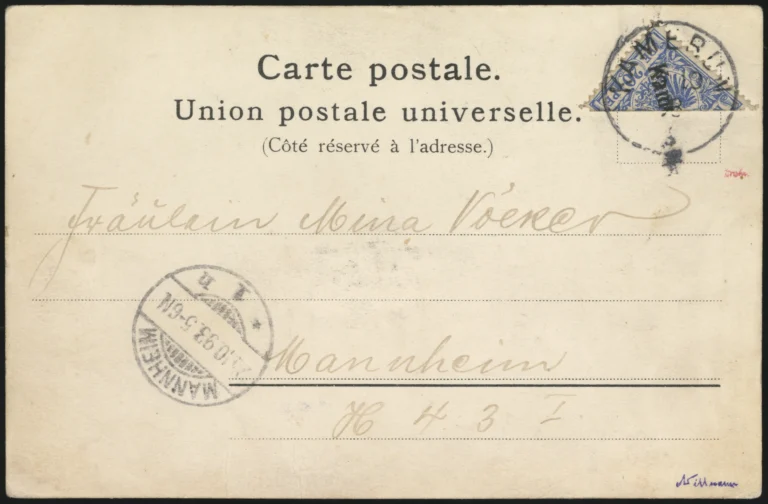
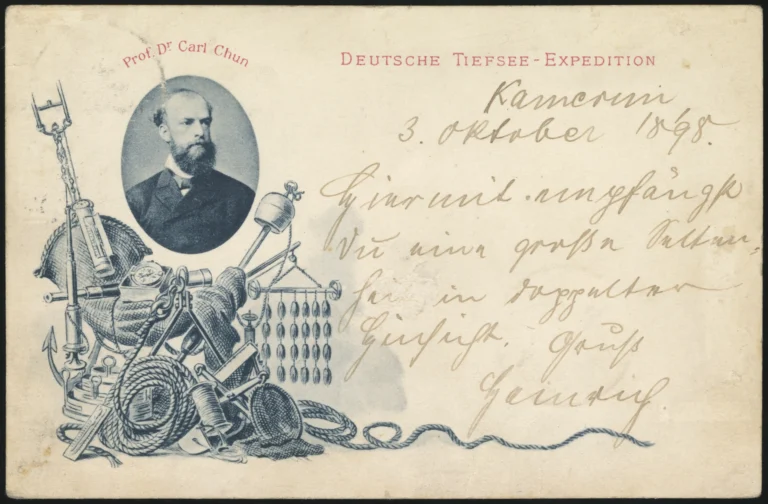
One highly sought variety of this series is Mi. 4 H, the so-called Valdivia provisional, which is a tolerated usage of a bisected 20 Pf stamp used as a 10 Pf stamp at the Kamerun office only on 3 October 1898. This was done as a provisional measure due to a shortage of 10 Pf stamps caused by the visit to Kamerun of the Deutsche Tiefsee-Expedition (German Deep Sea Expedition) (below) aboard the steamer Valdivia. This shortage was apparently solved very quickly.
However, as collectors of German bisects know, the Reichpost was very much against the practice. To say they “frowned upon it” is something of an understatement, as the Reichspost indicated in the following excerpt from the English translation of the Friedmann guide shows:
“…You are informed that the franking of a number of letters in Kamerun with bisected 20 Pf stamps was done by the local post office on its own responsibility to avert a temporary embarrassment. The Postal Ministry sees no reason to discuss the justification of this action further at this time.”
In modern terms, the Reichspost was essentially “throwing the Kamerun office under the town bus” while saying “is that a bus honking its horn?” at the same time.
As was the case across the German Colonial Empire, distinctive colonial stamps were issued for Kamerun beginning with the issue of a new 10 Pf stamp in April 1897. By the end of 1897, Kamerun post offices would be supplied with overprinted examples of all six (6) values from the 1889 definitive series. All values consist of an otherwise ordinary German definitive with the word “KAMERUN” overprinted diagonally across the face of the stamp at approximately 56°.
Despite several values going through multiple printings, the angle of the overprint was never changed as long as this series was current. This overprint appears to have been applied very consistently, and with a little more attention paid to quality control. Unlike in other colonies, Michel does not note any varieties related to flaws involving the overprint. Indeed, the only overprint variety noted is a “stronger overprint” created in early 1897 on 800 sets of stamps sent as specimens to the Universal Postal Union – the “Bern” Issue (below).
Collectors of plate flaw varieties involving the underlying stamps typically will find little to collect in this issue. As is the case with most of the overprinted colonial issues, not all of the plate flaws noted for the 1889 series were present on stamps that received colonial overprints. Michel lists five in the case of Kamerun; in addition to the nearly universal break in the right scroll on the 3 Pf stamp, Michel notes a short foot on “P” in “PF.” on the 10 Pf, and on the 25 Pf, a split in the top of “I” of “Reichspost”, a damaged top right of the “I” in “Reuchspost”, and a colored dot next to the lower left scroll.
One highly sought variety of this series is Mi. 4 H, the so-called Valdivia provisional, which is a tolerated usage of a bisected 20 Pf stamp used as a 10 Pf stamp at the Kamerun office only on 3 October 1898. This was done as a provisional measure due to a shortage of 10 Pf stamps caused by the visit to Kamerun of the Deutsche Tiefsee-Expedition (German Deep Sea Expedition) (below) aboard the steamer Valdivia. This shortage was apparently solved very quickly.
However, as collectors of German bisects know, the Reichpost was very much against the practice. To say they “frowned upon it” is something of an understatement, as the Reichspost indicated in the following excerpt from the English translation of the Friedmann guide shows:
“…You are informed that the franking of a number of letters in Kamerun with bisected 20 Pf stamps was done by the local post office on its own responsibility to avert a temporary embarrassment. The Postal Ministry sees no reason to discuss the justification of this action further at this time.”
In modern terms, the Reichspost was essentially “throwing the Kamerun office under the town bus” while saying “is that a bus honking its horn?” at the same time.
The Yacht Series

The “Yacht” series of Kamerun definitives was issued in November of 1900. Kamerun stamps of this design followed the “standard” series of issues denominated in Marks and Pfennigs, namely nine (9) small yachts with face values between 3 and 80 Pfennig, and four (4) large yachts with face values of between 1 and 5 Marks. The colors and shades of this issue match similar stamps issued in all the other colonies that used the Mark as their currency. Values for mint and used stamps also follow the trends for similar stamps from other colonies. The only exception to this is the 1 M value which has a CV of €80-€100 in either mint or used condition. The reason for this is somewhat unclear, but appears to be a combination of a lower than typical print run for 1 M stamps combined with a lower survival rate for used examples.
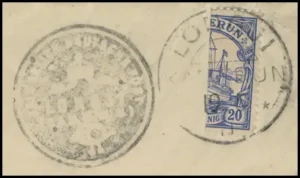
As was the case with the “Kamerun” overprints, one bisect exists from the Yacht series, the so-called Longji Provisional. As was previously the case, a post office ran low of 10 Pf stamps, so used bisected 20 Pf stamps in their place. Unlike the prior instance, this post office (Longji) also applied a strike of their dateless Dienstsiegel (official seal) beside the postmarked bisect (right). For those unfamiliar with the much more common Caroline 10 Pf bisects, the Dienstsiegel produces a negative image with the uninked areas creating the inscriptions and any symbols present in the seal – i.e., the exact opposite of what occurs in a postmark. Legitimate uses of the Longji bisect occurred only on 19 May 1911. Michel notes that other offices created bisects of Mi. 9, 10, and 21, but states explicitly that these are “philatelic gimmicks.”
The more unique areas of the Yacht series in Kamerun, rather, are found in the watermarked issues rather than the unwatermarked issues. Like several of the other colonies, lower value Friedensdruck versions of the 5 Pf and 10 Pf stamps were issued prior to the outbreak of the First World War. Printings of the 10 Pf value were high enough to generate two Friedensdruck shades, neither of which is considered rare or valuable.
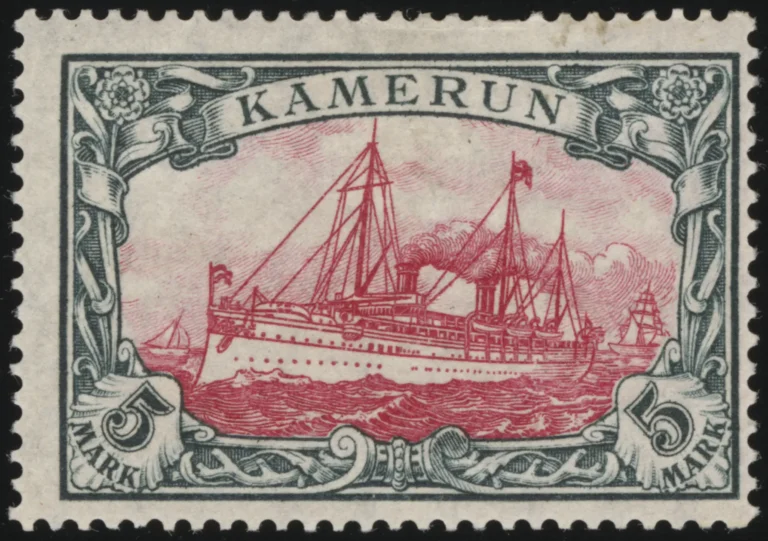
Unlike in other colonies, though, these stamps were joined by watermarked versions of the 20 Pf, 1 M, and 5 M stamps as well. Although Friedensdruck 1 M stamps never reached the colony and so do not exist in postally used condition, the 20 Pf and 5 M stamps did reach Kamerun and can be collected used or on cover. Both are worth substantially more when genuinely used; the 20 Pf has a CV of €150 if used (versus €4,50 mint) while the collector will need approximately €5,000 to get a used 5 M rather than €80 for mint.
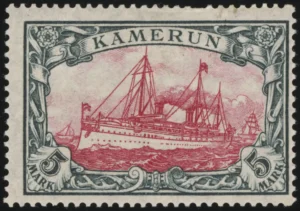
Additionally, the Friedensdruck 5 M stamp was printed with both pre-war “26:17” as well as war-time “25:17” perforations. The Friedensdruck 5 M with 25:17 perforations (top right) was never postally used, but mint examples are also very hard to come by as indicated by their €1,000 Michel CV. As Michel says “expertisation is highly recommended.”
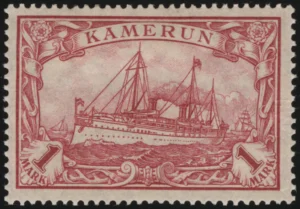
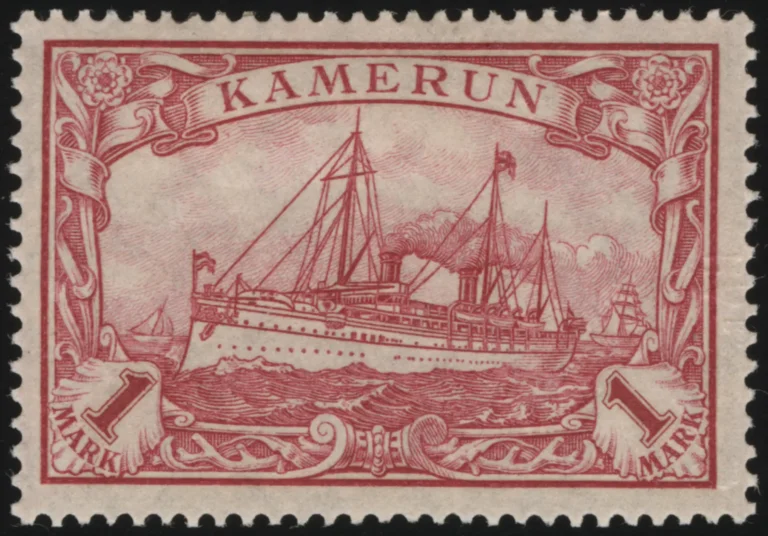
With regard to Kriegsdruck printings, Kamerun offers the collector a variety of options in both the shade and perforation varieties. The Reichspost produced only one shade each of Kriegsdruck 3 Pf and 5 Pf stamps, but produced three (3) Michel-listed shades of the 20 Pf—two of which are actually more highly valued in the Michel catalogue than mint examples of the Friedensdruck printing. Additionally, both the 1 M and 5 M stamps were issued with 26:17 and 25:17 perforations. For once, there is really not much value difference between perforation varieties for the 5 M value. However, 1 M stamps with the 26:17 perforations (bottom right) have catalogue values 11 times higher than their 25:17 siblings.
The “Yacht” series of Kamerun definitives was issued in November of 1900. Kamerun stamps of this design followed the “standard” series of issues denominated in Marks and Pfennigs, namely nine (9) small yachts with face values between 3 and 80 Pfennig, and four (4) large yachts with face values of between 1 and 5 Marks. The colors and shades of this issue match similar stamps issued in all the other colonies that used the Mark as their currency. Values for mint and used stamps also follow the trends for similar stamps from other colonies. The only exception to this is the 1 M value which has a CV of €80-€100 in either mint or used condition. The reason for this is somewhat unclear, but appears to be a combination of a lower than typical print run for 1 M stamps combined with a lower survival rate for used examples.
As was the case with the “Kamerun” overprints, one bisect exists from the Yacht series, the so-called Longji Provisional. As was previously the case, a post office ran low of 10 Pf stamps, so used bisected 20 Pf stamps in their place. Unlike the prior instance, this post office (Longji) also applied a strike of their dateless Dienstsiegel (official seal) beside the postmarked bisect (below).
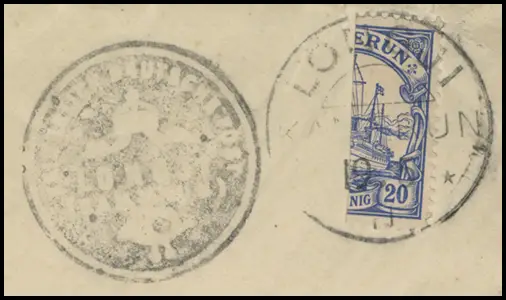
For those unfamiliar with the much more common Caroline 10 Pf bisects, the Dienstsiegel produces a negative image with the uninked areas creating the inscriptions and any symbols present in the seal – i.e., the exact opposite of what occurs in a postmark. Legitimate uses of the Longji bisect occurred only on 19 May 1911. Michel notes that other offices created bisects of Mi. 9, 10, and 21, but states explicitly that these are “philatelic gimmicks.”
The more unique areas of the Yacht series in Kamerun, rather, are found in the watermarked issues rather than the unwatermarked issues. Like several of the other colonies, lower value Friedensdruck versions of the 5 Pf and 10 Pf stamps were issued prior to the outbreak of the First World War. Printings of the 10 Pf value were high enough to generate two Friedensdruck shades, neither of which is considered rare or valuable.
Unlike in other colonies, though, these stamps were joined by watermarked versions of the 20 Pf, 1 M, and 5 M stamps as well. Although Friedensdruck 1 M stamps never reached the colony and so do not exist in postally used condition, the 20 Pf and 5 M stamps did reach Kamerun and can be collected used or on cover. Both are worth substantially more when genuinely used; the 20 Pf has a CV of €150 if used (versus €4,50 mint) while the collector will need approximately €5,000 to get a used 5 M rather than €80 for mint.
Additionally, the Friedensdruck 5 M stamp was printed with both pre-war “26:17” as well as war-time “25:17” perforations. The Friedensdruck 5 M with 25:17 perforations (below) was never postally used, but mint examples are also very hard to come by as indicated by their €1,000 Michel CV. As Michel says “expertisation is highly recommended.”
With regard to Kriegsdruck printings, Kamerun offers the collector a variety of options in both the shade and perforation varieties. The Reichspost produced only one shade each of Kriegsdruck 3 Pf and 5 Pf stamps, but produced three (3) Michel-listed shades of the 20 Pf—two of which are actually more highly valued in the Michel catalogue than mint examples of the Friedensdruck printing. Additionally, both the 1 M and 5 M stamps were issued with 26:17 and 25:17 perforations. For once, there is really not much value difference between perforation varieties for the 5 M value. However, 1 M stamps with the 26:17 perforations (below) have catalogue values 11 times higher than their 25:17 siblings.
Booklets

Kamerun was one of three African colonies, including SW Africa and East Africa, to issue stamps in booklet form. As was the case with the other two colonies, three different booklets were issued, identified by the letter printed on the front cover of the booklet. All three contained only 5 Pf and 10 Pf watermarked Yacht stamps, which added up to 2 Marks in face value.
Booklets “A” and “B” were issued only in Kamerun and were not sold at the philatelic counter in Berlin. These consisted only of single-denomination panes of five stamps with an advertisement label in the upper left position of the pane. Intact booklets, as well as intact booklet panes, command substantial premiums over other multiples of sheet stamps issued at the same time. Single stamps attached to the labels are also notably more valuable than other single used stamps.
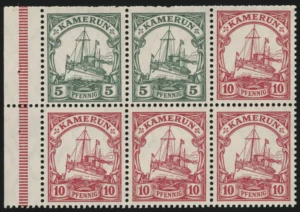
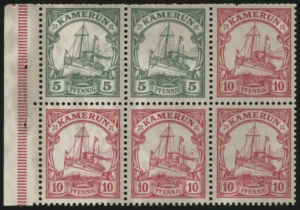
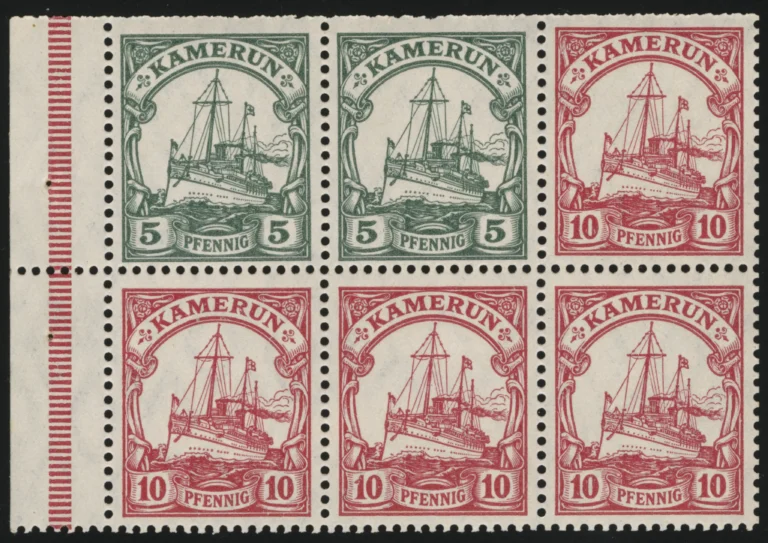
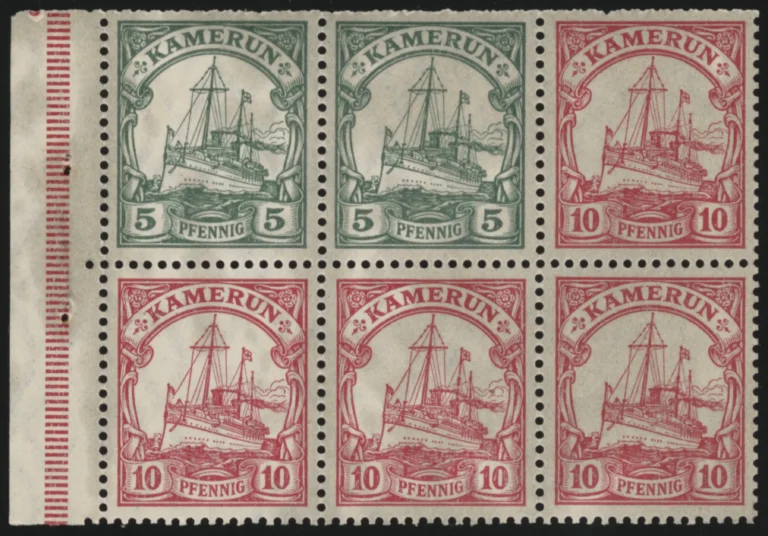
Booklet “C”, on the other hand, was never sold in Kamerun. These booklets were only available in Berlin from the philatelic counter, and stamps were not available for use in Kamerun. Panes from these booklets do not include any ad labels in the manner of the earlier booklets. Instead, the “C” booklet consisted of the following: 1 pane (of 6) of the 10 Pf stamp, 3 panes of the 5 Pf stamp, and 1 se-tenant pane consisting of 2 x 5 Pf and 4 x 10 Pf. The ads were moved to the dividers and the covers of the booklets rather than being printed on labels as was done previously.
Both booklets were produced with “A” and “B” type perforations. Type “A” perforations (top right) cut all the way through the selvage on the left-hand side of the pane, while type “B” perforations (bottom right) did not. The differences can be seen in the scans of these perforation differences. Due to production quality issues, most booklet panes are found with straight edges or perfs cut short when the panes were cut apart by the printer. This is considered to be their typical condition.
Kamerun was one of three African colonies, including SW Africa and East Africa, to issue stamps in booklet form. As was the case with the other two colonies, three different booklets were issued, identified by the letter printed on the front cover of the booklet. All three contained only 5 Pf and 10 Pf watermarked Yacht stamps, which added up to 2 Marks in face value.
Booklets “A” and “B” were issued only in Kamerun and were not sold at the philatelic counter in Berlin. These consisted only of single-denomination panes of five stamps with an advertisement label in the upper left position of the pane. Intact booklets, as well as intact booklet panes, command substantial premiums over other multiples of sheet stamps issued at the same time. Single stamps attached to the labels are also notably more valuable than other single used stamps.
Booklet “C”, on the other hand, was never sold in Kamerun. These booklets were only available in Berlin from the philatelic counter, and stamps were not available for use in Kamerun. Panes from these booklets do not include any ad labels in the manner of the earlier booklets. Instead, the “C” booklet consisted of the following: 1 pane (of 6) of the 10 Pf stamp, 3 panes of the 5 Pf stamp, and 1 se-tenant pane consisting of 2 x 5 Pf and 4 x 10 Pf. The ads were moved to the dividers and the covers of the booklets rather than being printed on labels as was done previously.
Both booklets were produced with “A” and “B” type perforations. Type “A” perforations (top below) cut all the way through the selvage on the left-hand side of the pane, while type “B” perforations (bottom below) did not. The differences can be seen in the scans of these perforation differences. Due to production quality issues, most booklet panes are found with straight edges or perfs cut short when the panes were cut apart by the printer. This is considered to be their typical condition.
Bahnpost

Kamerun was one of four German colonies in which colonial railroads operated.
In Kamerun, a railway named the “Nordbahn” ran a relatively short distance of 135 km (84 miles) north from the port town of Bonaberi to the railway terminus in the town of Nkongsamba. Why this was called the “Nordbahn” is not completely clear; other railroads were planned but did not open prior to the war. Initially, the railroad applied the old “Duala” type 1 postmark with the year removed, so showing only the month and year of the date. It was applied in violet ink (from January 1912-November 1912) and in black ink (from November 1912-May 1913). In 1912, the year date “12” is sometimes seen applied separately, and can appear in odd places within the cancel.
In the period between 18 May 1913 and 25 September 1914, two styles of oval German-style “Bahnpost” cancels were used along this line, which generally resemble similar marks used in Germany proper, but which are more elongated than this type of cancel. It may be that the cancels needed to be wider in order to accommodate the longer place names placed along the top arc of the oval (right). Having said that, this is the only German colonial cancel where the word “Zug” (train) is not spelled out completely but is shown as “Z. (number)” even though there is more than enough space to write it out completely. Two train numbers, 1 and 2, can appear on the left-hand side of the oval after the “Z.”, of which the number 1 is worth significantly more than the number 2.
Kamerun was one of four German colonies in which colonial railroads operated.
In Kamerun, a railway named the “Nordbahn” ran a relatively short distance of 135 km (84 miles) north from the port town of Bonaberi to the railway terminus in the town of Nkongsamba. Why this was called the “Nordbahn” is not completely clear; other railroads were planned but did not open prior to the war. Initially, the railroad applied the old “Duala” type 1 postmark with the year removed, so showing only the month and year of the date. It was applied in violet ink (from January 1912-November 1912) and in black ink (from November 1912-May 1913). In 1912, the year date “12” is sometimes seen applied separately, and can appear in odd places within the cancel.
In the period between 18 May 1913 and 25 September 1914, two styles of oval German-style “Bahnpost” cancels were used along this line, which generally resemble similar marks used in Germany proper, but which are more elongated than this type of cancel. It may be that the cancels needed to be wider in order to accommodate the longer place names placed along the top arc of the oval (below).
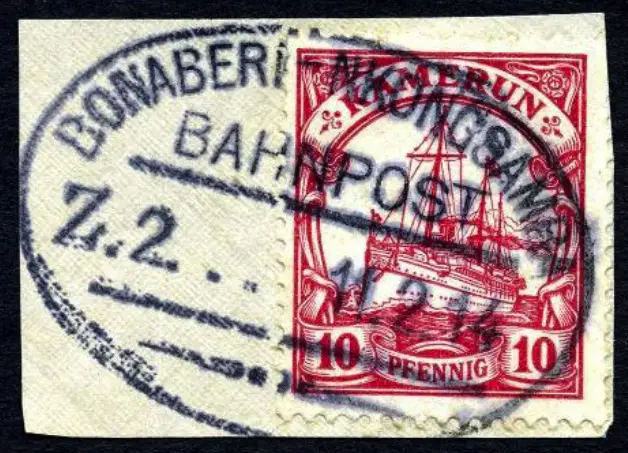
Having said that, this is the only German colonial cancel where the word “Zug” (train) is not spelled out completely but is shown as “Z. (number)” even though there is more than enough space to write it out completely. Two train numbers, 1 and 2, can appear on the left-hand side of the oval after the “Z.”, of which the number 1 is worth significantly more than the number 2.
Wartime

Kamerun was lucky – perhaps – in that the colony did not fall under Allied control immediately after the start of the First World War. Instead, the Allies had to militarily conquer the colony in stages. The British and French would end up invading the colony from the borders of their respective colonies (Nigeria and French Equatorial Africa), with all or nearly all the coastal areas falling under their control by the end of 1914. The British would end up moving inland more slowly after that, while the French took over most of the areas along their borders more slowly. By early 1915, German control was reduced to the part of the colony to the center and slightly to the south, centered around the town of Jaunde.
About half of the postal facilities in the colony remained under German control at the beginning of 1915, although that area shrank steadily as the war progressed. Once Jaunde fell on the last day of 1915, the German population in that area moved overland to the town of Ngoa on the border of the Rio Muni part of Spanish Guinea. The entire German civilian population, along with what was left of the government, tried to hold out until 2 February 1916, when they finally crossed the border into Spanish territory. These people would be interned on the island of Fernando Poo (now Bioko), which was another part of Spanish Guinea. This internment would last until 1920 for the Africans who came with the Germans. The last German outpost at Mora would surrender to the Allies at this time due to lack of ammunition.
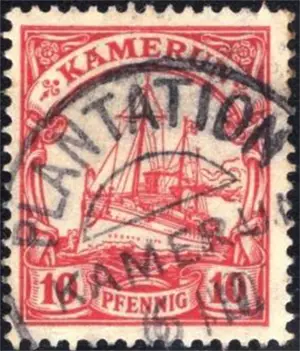
Collectors of “war date” cancellations will have a wealth of cancels to hunt for, but knowledge of specific dates of use are vital. Adding to the confusion, some postal facilities used cancel devices from a post office which closed but whose operations moved along with the fleeing Germans. For example, all of the 1916 war date cancels are known from the 2nd cancel device of the Ebolwoa post office, with dates known up to 2 February of that year. However, Ebolwoa fell to the Allies and was closed on 8 January. The postal facilities and the cancel device moved with the Germans to Ngoa, where it continued to be used for another month. This sort of “movement” of postal facilities was a common factor. In one other instance, the town of Makure (which did not have its own post office) “hosted” the postal facilities of Kribi, Longji, and Plantation for awhile once those offices were closed under Allied onslaught.
Occasionally, usage of legitimate cancel devices on legitimate German colonial stamps does not count as a war date. Some cancel devices were retained. Another example would be war dates for Ukoko, which are known in 1914. Genuine uses are hard to come by, particularly since this cancel device was captured by the French and applied to German stamps that were in the post office. The Michel catalogue notes that this cancel, applied in purple and with a date of 16 September 1914 is an example from the French occupation period.
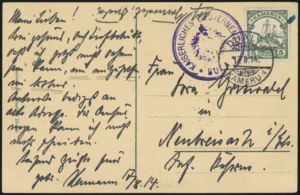
Kamerun was lucky – perhaps – in that the colony did not fall under Allied control immediately after the start of the First World War. Instead, the Allies had to militarily conquer the colony in stages. The British and French would end up invading the colony from the borders of their respective colonies (Nigeria and French Equatorial Africa), with all or nearly all the coastal areas falling under their control by the end of 1914. The British would end up moving inland more slowly after that, while the French took over most of the areas along their borders more slowly. By early 1915, German control was reduced to the part of the colony to the center and slightly to the south, centered around the town of Jaunde.
About half of the postal facilities in the colony remained under German control at the beginning of 1915, although that area shrank steadily as the war progressed. Once Jaunde fell on the last day of 1915, the German population in that area moved overland to the town of Ngoa on the border of the Rio Muni part of Spanish Guinea. The entire German civilian population, along with what was left of the government, tried to hold out until 2 February 1916, when they finally crossed the border into Spanish territory. These people would be interned on the island of Fernando Poo (now Bioko), which was another part of Spanish Guinea. This internment would last until 1920 for the Africans who came with the Germans. The last German outpost at Mora would surrender to the Allies at this time due to lack of ammunition.
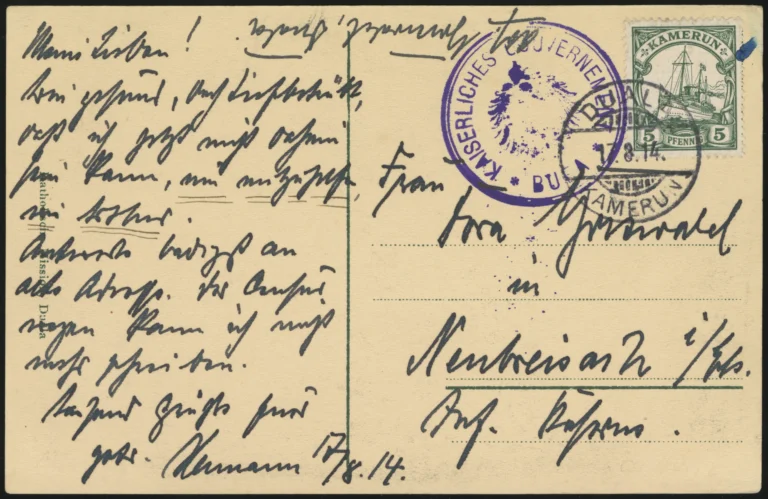
Collectors of “war date” cancellations will have a wealth of cancels to hunt for, but knowledge of specific dates of use are vital. Adding to the confusion, some postal facilities used cancel devices from a post office which closed but whose operations moved along with the fleeing Germans. For example, all of the 1916 war date cancels are known from the 2nd cancel device of the Ebolwoa post office, with dates known up to 2 February of that year. However, Ebolwoa fell to the Allies and was closed on 8 January. The postal facilities and the cancel device moved with the Germans to Ngoa, where it continued to be used for another month. This sort of “movement” of postal facilities was a common factor. In one other instance, the town of Makure (which did not have its own post office) “hosted” the postal facilities of Kribi, Longji, and Plantation for awhile once those offices were closed under Allied onslaught.
Occasionally, usage of legitimate cancel devices on legitimate German colonial stamps does not count as a war date. Some cancel devices were retained. Another example would be war dates for Ukoko, which are known in 1914. Genuine uses are hard to come by, particularly since this cancel device was captured by the French and applied to German stamps that were in the post office. The Michel catalogue notes that this cancel, applied in purple and with a date of 16 September 1914 is an example from the French occupation period.
Occupation

Owing to a relatively large number of stamps captured by the advancing Allies, the decision was made to put them back into use after overprints were applied to make them more politically correct.
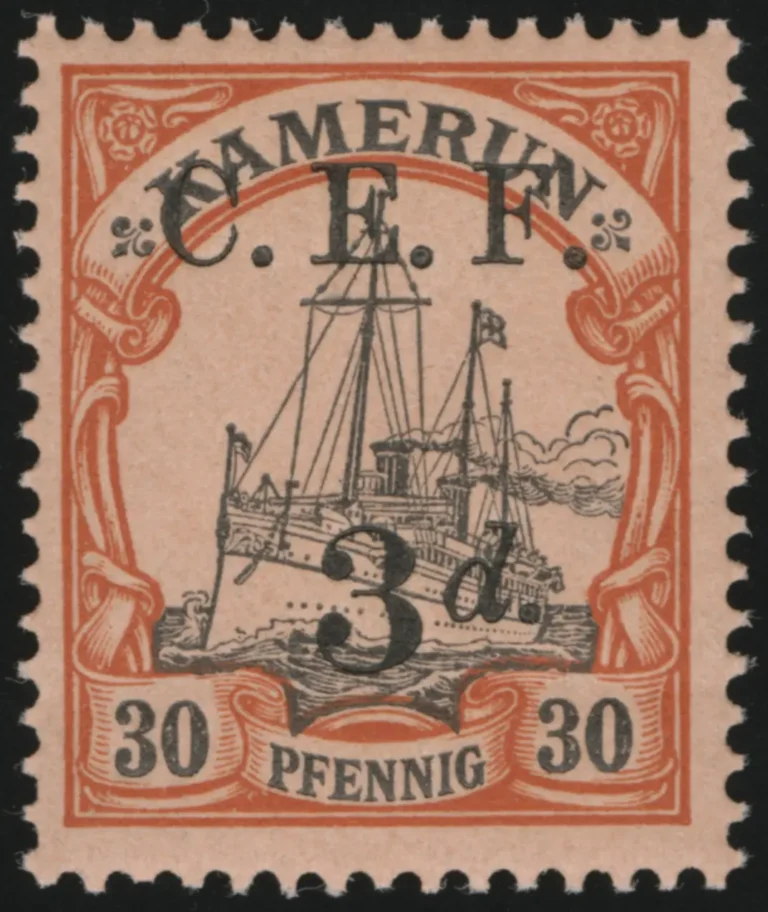
To this end, the British overprinted the entire series of Kamerun Yachts that was present in the post offices they took over. This meant that some denominations (5 Pf, 10 Pf, 20 Pf, and 5 M) were available on watermarked paper, while the rest were the older printing on normal paper.
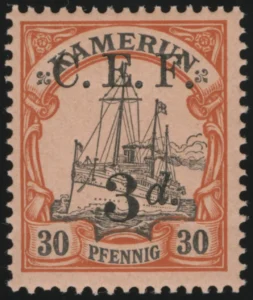
This British overprinted set has the letters “C.E.F. / (value)” with a new value in British currency. (C.E.F. stands for “Cameroon Expeditionary Forces”) (right).
Although the French undoubtedly also captured stocks of stamps, they did not issue any overprinted German stamps the way that the British did. Instead, the French overprinted stamps from their own colonies and placed them in use in the areas under their control.
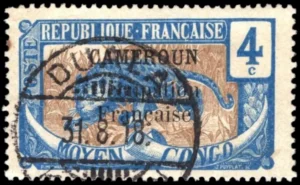
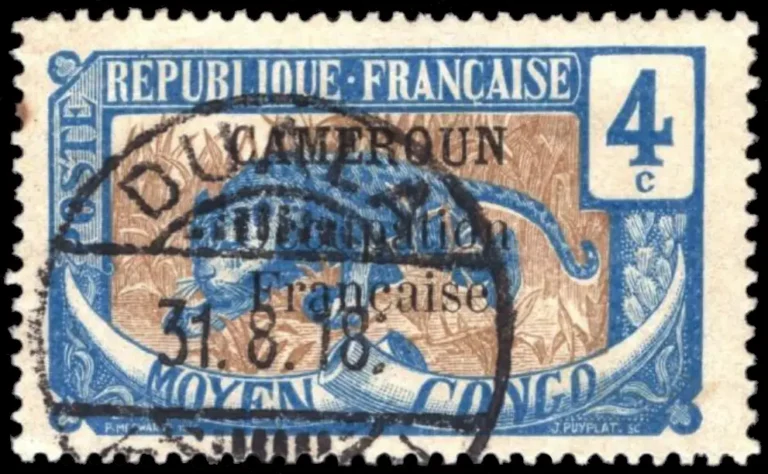
Initial French issues have overprints reading “Corps Expéditionnaire / Franco-Anglais / CAMEROUN” (Anglo-French Expeditionary Corps, Cameroun), applied mostly to stamps of French Equatorial Africa. Later issues have overprints reading “Occupation / Française / du Cameroun” or “CAMEROUN / Occupation / Française” or just “CAMEROUN” applied to stamps of the French Congo and Middle Congo (right).
Both the British and French used captured Kamerun cancel devices to process mail, although the cancel devices were replaced as quickly as possible with British and French devices. Usage of captured devices could sometimes be changed from one side to the other. Stamps from both sides were used at the Duala post office, for instance.
Owing to a relatively large number of stamps captured by the advancing Allies, the decision was made to put them back into use after overprints were applied to make them more politically correct. To this end, the British overprinted the entire series of Kamerun Yachts that was present in the post offices they took over. This meant that some denominations (5 Pf, 10 Pf, 20 Pf, and 5 M) were available on watermarked paper, while the rest were the older printing on normal paper. This British overprinted set has the letters “C.E.F. / (value)” with a new value in British currency. (C.E.F. stands for “Cameroon Expeditionary Forces”) (below).
Although the French undoubtedly also captured stocks of stamps, they did not issue any overprinted German stamps the way that the British did. Instead, the French overprinted stamps from their own colonies and placed them in use in the areas under their control. Initial French issues have overprints reading “Corps Expéditionnaire / Franco-Anglais / CAMEROUN” (Anglo-French Expeditionary Corps, Cameroun), applied mostly to stamps of French Equatorial Africa. Later issues have overprints reading “Occupation / Française / du Cameroun” or “CAMEROUN / Occupation / Française” or just “CAMEROUN” applied to stamps of the French Congo and Middle Congo (below).
Both the British and French used captured Kamerun cancel devices to process mail, although the cancel devices were replaced as quickly as possible with British and French devices. Usage of captured devices could sometimes be changed from one side to the other. Stamps from both sides were used at the Duala post office, for instance.
Post Offices & Postmarks
What follows is an alphabetical list and brief description of the Post Offices of Kamerun and their associated cancels. The letters UKTT indicate towns in the UK Trust Territory. The letters NK indicate towns in the Neu Kamerun area incorporated into the colony from France in 1911. The letters NB show a town on the Nordbahn railroad.
Abong-Mbang

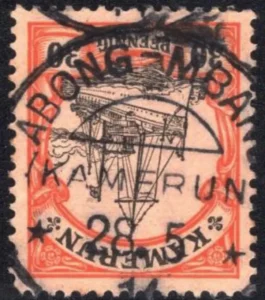
This is a town of about 20,000 residents located near the source of the Nyong river in Cameroon’s East Region. It was and remains an important trading center in a mountainous region close to the modern borders of the Republic of Congo, Gabon, and the Central African Republic.
Akoafim
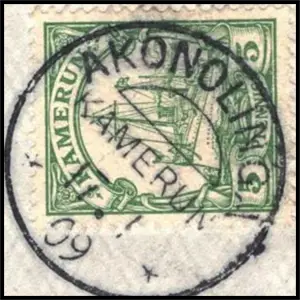
Akonolinga

This town of about 20,000 residents is located in Cameroon’s central region, close to the current national capital city of Yaoundé. In German colonial times, roads connected the two, which stand about 100 km apart.
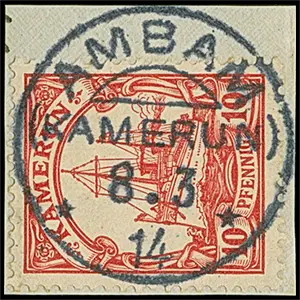
Ambam

This is a small border town (about 1,500 residents), whose main importance in the German period lay in its geography. It is very near to the tripoint where the borders of Cameroon, Gabon, and Rio Muni (Spanish / Equatorial Guinea) meet.
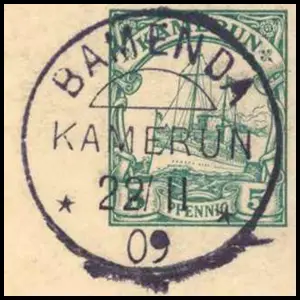
Bamenda

The town of Bamenda was one of the towns occupied by the British during the War, and is located in what used to be the southern part of British Cameroons. For this reason, Bamenda is actually the largest English-speaking city in mostly French-speaking Cameroon. Approximately 350,000 people live here.
The city is also a center of unrest for a secessionist movement which seeks to separate the English-speaking regions from the rest of Cameroon, seeking to create a new state called “Ambazonia.” (UKTT)
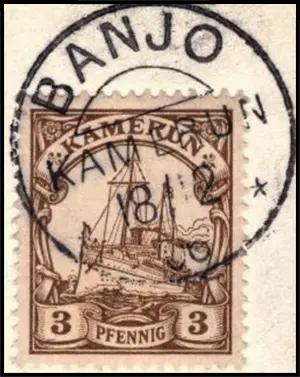
Banjo

Now spelled “Banyo”, this is a small town in Cameroon’s Adamawa Region in the northern part of central Cameroon. The town is essentially a border town a few kilometers from the Nigerian border near to where the border between British Northern and Southern Cameroons. Banyo is also in the English-speaking part of Cameroon. (UKTT)
Bare

Now spelled “Baré”, this is a town of about 15,000 in Cameroon’s Littoral (Coastal) Region.
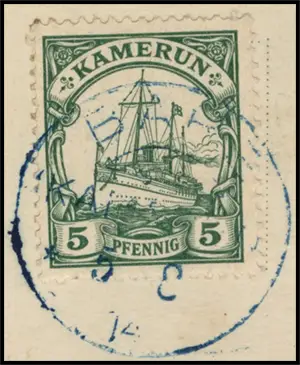
Bibundi

This town is no longer a separate municipality, but is a part of the modern town of Idenau, which appears to have absorbed Bibundi during the French period. Idenau is not a large town, having perhaps 6,000 inhabitants, and is found on the coast of Cameroon in the English-speaking South-West Region of Cameroon, relatively near to the island of Bioko (formerly Fernando Poo) which belongs to Equatorial Guinea. (UKTT)
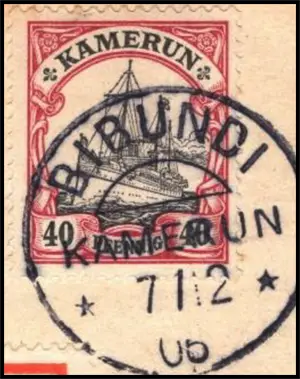
Bipindihof

This postal facility’s name apparently does not refer to a town, but rather to a specific building. The village in which it was located is actually called “Bipindi.”
Georg Zenker, a botanist from Leipzig, settled at the village of Bipindi in early 1896, and built what has been described as a “Palace” which was called “Bipindihof.” From here, he ran a business which largely involved sending a number of biological specimens from the local area to buyers mostly in Europe. Zenker was buried on the grounds of Bipindihof when he died in 1922.
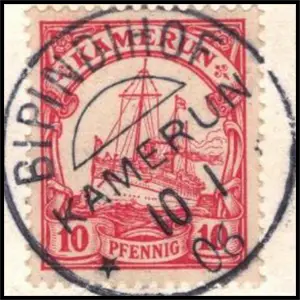
Bonaberi

No longer a physically separate municipality and now spelled “Bonabéri”, this town is physically contiguous with the 4th Arrondissment of the much larger city of Douala (Duala).
Bonabéri has approximately 300,000 inhabitants and is situated across the Wouri river from the Douala city center. Bonabéri essentially functions as the home of the port facilities for the greater Douala area.
Bonabéri also had a train station and was the port terminus of the Bonaberi-Ngkongsamba railway, which used a distinctive oval Bahnpost date stamp. (NB)
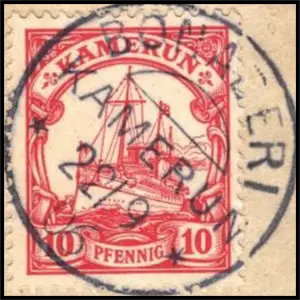
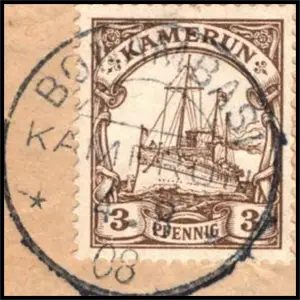
Bonambasi
This town appears as a stop on the Nordbahn railroad, and no longer appears on modern maps. It may have been a postal facility in existence solely due to the railroad line, which opened approximately when the tracks reached its location. (NB)
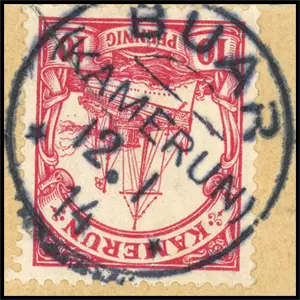
Buar
One of the rarer town postmarks of Kamerun, the Buar office under German rule was only open between 12 January and c. 16 October of 1914. It was one of the first towns in the far eastern portion of Kamerun to fall to invading French forces.
One of the post offices in Neu Kamerun, Buar was returned to French Equatorial Africa in 1918, and is now the town of Bouar in the western part of the Central African Republic.
Buea

Buea during the German period was the colonial capital from 1901 until the end of German Kamerun and is located close to the coast of the country.
Buea would then become the capital of British Southern Cameroons, and remains the capital of the Southwest Region of modern Cameroon. The self-declared state of Ambazonia regards Buea as its capital as well. (UKTT)
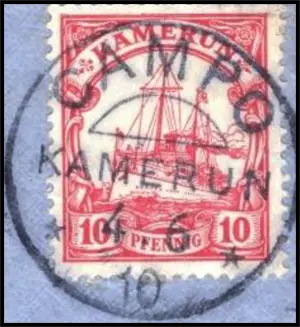
Campo / Kampo
This town’s name was spelled “Campo” when the post office opened in 1906, but the spelling was changed to “Kampo” in 1913 during a period when the spelling of town names in German colonial cancels was being changed to better conform to German orthography. The town’s name was changed back to “Campo” under the French.
The town is located on the Atlantic coast of Cameroon and is the main border crossing point into Rio Muni (Equatorial Guinea). It is also close to Campo Ma’an National Park.
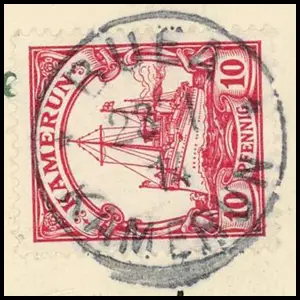
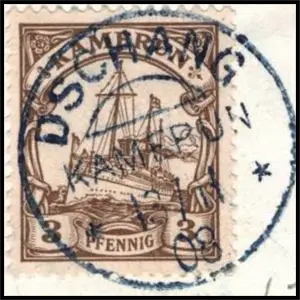
Dschang

located in Cameroon’s West region, this city was developed by the French as a resort town and has gained importance since the 1940’s. It is located on former border between British Southern Cameroons and the French mandate of Cameroun. Should Ambazonia obtain independence, it would then become a border town again.
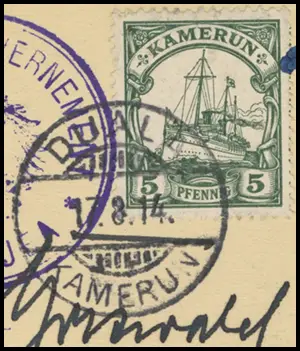
Duala

The economic capital city of Cameroon, and the former German colonial capital (until 1901), modern Douala has a population approaching 6 million (roughly 20% of Cameroun’s entire population).
Originally named “Kamerunstadt”, the city was renamed in 1901. German Duala was the foundation of the colony of Kamerun, and the first town with a German post office.
This office used multiple postmarks, and was one of two (along with Kribi) to use a “Swiss” style cancel device with a “date bridge” above and below the date, in three forms.
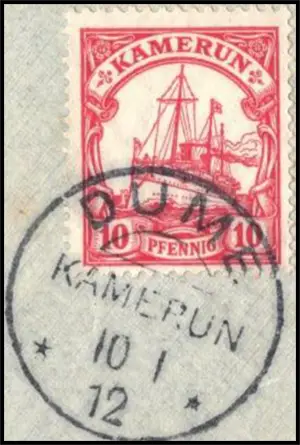
Dume

Now spelled “Doumé”, the German settlement here centered on a fort, “Dumestation” which housed the local Schutztruppe and also a prison. Under the Germans, this was a strategic point of control for eastern Kamerun. The town fell to the French in July of 1915, and is today a small city of around 20,000 inhabitants.
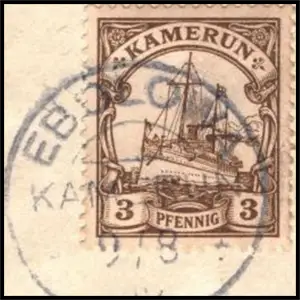
Ebolwoa / Ebolowa

Now a city of about a quarter million residents, Ebolowa is located in southern Cameroon, relatively close to the tri-point where Cameroon, Rio Muni, and Gabon come together.
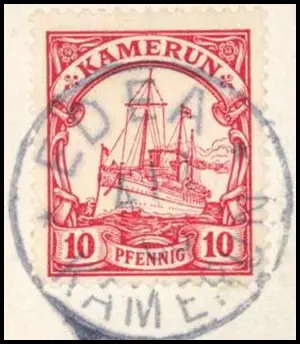
Edea

Now spelled “Édéa”, this is a city about 40 miles / 61 km from Douala. Edea was the site of two battles during the First World War, particularly due to the presences of the Japoma Bridge over the Sanaga river. This bridge, now known as the “German Bridge” was built in 1911, and as late as the 1980’s, was still the only bridge over the river for rail, road, and foot traffic.
Edea now has about 125,000 inhabitants, and is a center for agriculture (cocoa and bananas) and for minerals such as bauxite and iron.
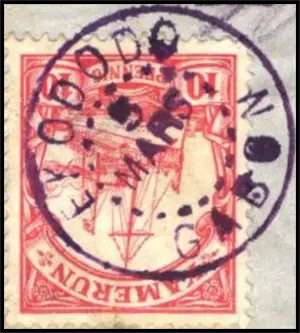
Ekododo
This post office was open primarily under French administration in Gabon, prior to the creation of Neu Kamerun.
The cancel device was left behind when the French turned this part of the territory over to the Germans, who used it to cancel some German stamps. Later uses of the French device, i.e. in early 1913, continue to show the month in French but without any indication of the year.
The Ekododo office did put a German cancel device into use, but the German cancel device was only in use for about six months in 1913 prior to the office closing.
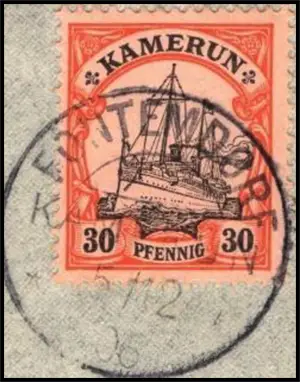
Fontemdorf
This town is presently known as “Fontem” and is located in the South West region of Cameroon. It is located on the border of the former British Southern Cameroons and the French mandate of Cameroun, so is officially English speaking. (UKTT)
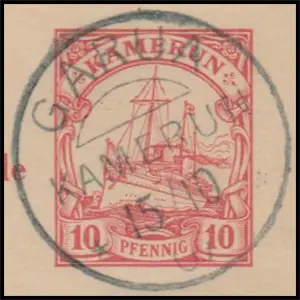
Garua

Now spelled “Garoua” this town is a city of over 1.3 million in the North region of Cameroon. Originally founded by the Emir of Adamawa in the 19th century, is described as “an oasis in the middle of the brush.”
This might be one of the fastest growing cities in the country; Garoua’s population is now over 40 times what it was in the mid-1960’s and it is modern Cameroon’s third largest city. The city has been a port on the Benoué river which previously served the north of the country, although the port facilities are no longer used.
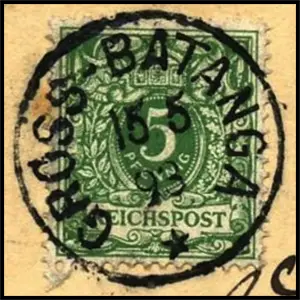
Gross-Batanga

Now known by its French transliteration, “Grand Batanga”, this place is now a fishing village politically part of the 1st Arondissment of the city of Kribi. Never a large place, the Germans presumably decided that postal operations could be run from Kribi. This office closed shortly before the office at Kribi opened.
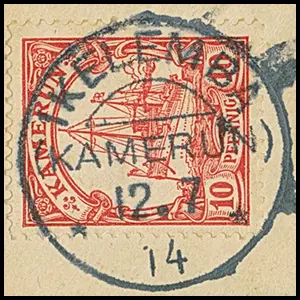
Ikelemba
This town in Neu Kamerun only had a German post office on 1 April 1914, and closed on 20 August 1914. For this reason, this postmark is the second-highest valued postmark in ArGe with a CV of €1,300.
The town was established in order to give Germany a usable port facility on the Sangha River, which feeds directly into the Congo River. This was the stated objective of gaining Neu Kamerun in the first place. The area near the town, though, was largely swamp and of uncertain value for this commercial purpose. The site of the town is located in what is now the Ouésso district Republic of Congo. (NK)
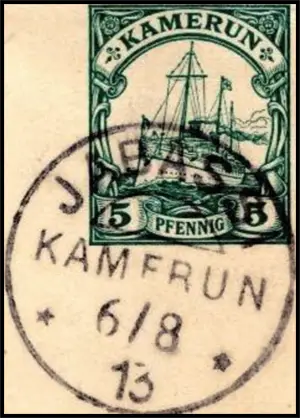
Jabassi

Now spelled “Yabassi”, this town is located in the Littoral (Coastal) Region of Cameroon. Under the Germans, Jabassi was a military and economic hub; it also hosted a German-founded Catholic mission.
In the modern era, Yabassi is considered quite rural despite being just 100km (60 miles) from Douala. It is cut off from its larger neighbor, as there are very few paved roads linking the two.
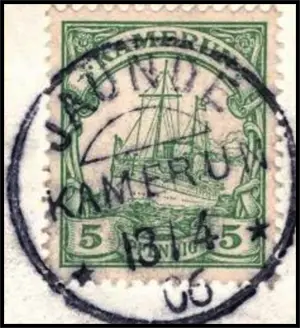
Jaunde

The current national capital now known as “Yaoundé”, this is a modern city of nearly 4 million residents.
German Jaunde was the de facto capital of Kamerun in late 1914 and throughout 1915 as the German population largely fled here once the coastal towns were taken over and occupied by the Allies. The town remained under German control until 31 December 1915, and was one of the last towns to fall to the Allies.
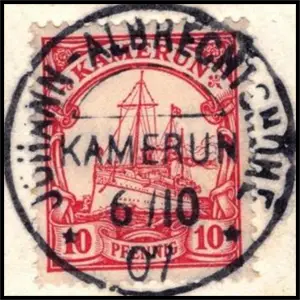
Johann-Albrechtshöhe

The postal facilities served a research station on the shores of the lake known as the “Elephantsee” during the German colonial period, and now known as “Barombi Mbo”. The lake is a crater / volcanic lake known in German times for elephants (which no longer come to the lake) and for its biological diversity.
The research station was the haunt of colonial propagandists and explorers, including Eugen Zintgraff, the first European to explore beyond the coastal regions of Cameroon. No modern town replaced this research station, so it has no modern equivalent.
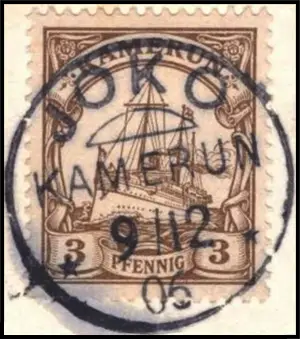
Joko

This is a small town, having been raised to “commune” status in Cameroon only in 1955. There are now about 12,000 inhabitants living in what is now known as “Yoko” in central Cameroon.
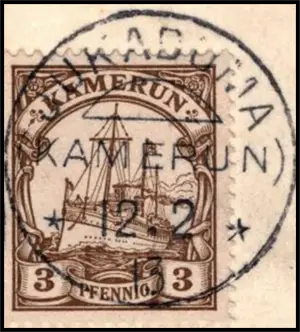
Jukaduma
A small city of about 112,000 inhabitants today, “Yokadouma” is located in the far east of Cameroon, fairly close to the border with the Central African Republic. It is known today as a center of the forestry industry in Cameroon, as well as being known for cultivation of coffee and cacao.
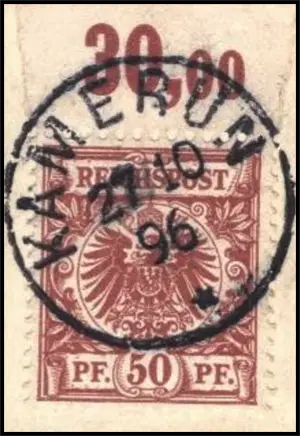
Kamerun

Original name of Duala. Uses of the cancel devices reading “Duala /Kamerun” and just “Kamerun” overlapped for a few days, between 1 June and 4 June 1901.
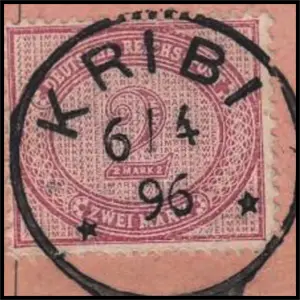
Kribi

Kribi is located to the south of Douala, and is now largely contiguous with its larger neighbor. Kribi now is an important port and beach resort. It is located roughly half-way between the Rio Muni part of Equatorial Guinea and central Douala, across the Gulf of Guinea from Bioko Island (also Equatorial Guinea.)
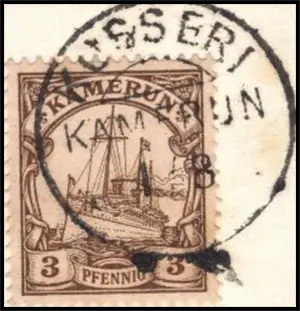
Kusseri

Kusseri, renamed “Fort Foureau” by the French after the war, and once again “Kousséri” after independence, is located on the border with Chad in the extreme north of the country. The city has about 100,000 inhabitants, and is located just 10 km to the west of the Chadian capital city of N’Djamena.
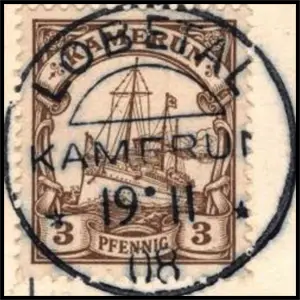
Lobetal

Now known as “Lobethal”, this is a village on the coast of Cameroon which was absorbed by the newly created commune of Mouanko in 1959. The 2005 Cameroun census recorded a population of 337 in this formerly independent village.
The town was important in the German period as the site of an 1892 Swiss Protestant missionary settlement of the “Basler Mission,” or the “Evangelische Missionsgesellschaft in Basel”, which established a missionary outpost there in 1892. I t was something of a competitor to the Catholic mission at Marienberg, which was also absorbed by the commune of Mouanko.
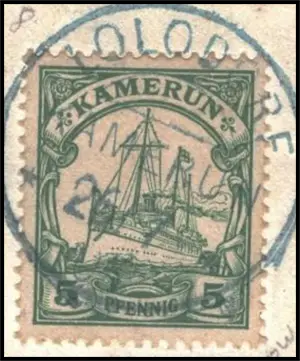
Lolodorf

Originally “Lule dorf”, or “town of Lule”, Lolodorf is one of a few places in Cameroon that retains a name of German origin with no spelling changes, and is located in the Cameroon’s south province. Lolodorf is famous in part as the home of several ethnic Pygmy clans.
Lomie
Now “Lomié”, a small commune of about 20,000 inhabitants in southeastern Cameroon, this locality was known for wood and other forest products, but has recently become more important as the site of mines producing Zinc and Cobalt.
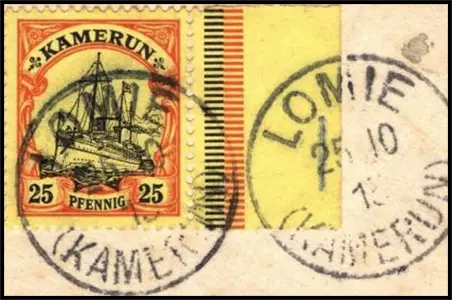
Longji

No longer a separate community, “Londji” was absorbed by its much larger neighbor, Kribi, and is now regarded as a subdivision of this city. Prior to this incorporation into Kribi, Londji was known as a fishing village on the coast of the Atlantic Ocean, and retains a place of importance for eco-tourism due to its mangroves and beaches.
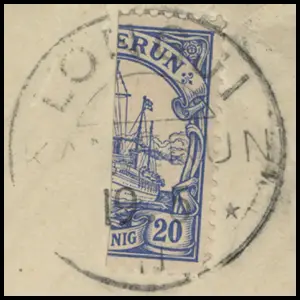
Marienberg

A village in the commune of Mouanko. This village was, and remains, of importance primarily due to the Catholic church. German Catholic missionaries founded the town in 1890, and it is regarded as the cradle of the Catholic Church in Cameroon.
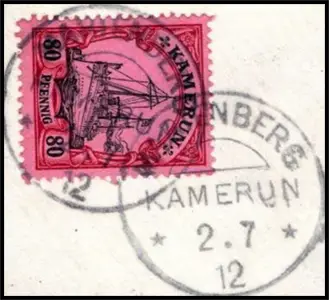
Molundu

Modern Molondou is the southeast corner of Cameroon, near the border with the Republic of Congo. It was famous during the German colonial period as an area rich from rubber production.
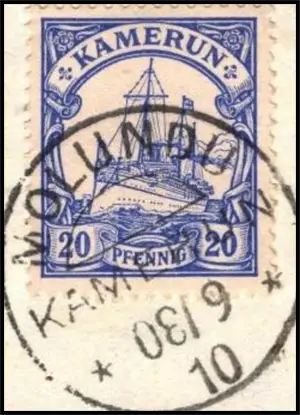
Mora
Located in the Far North region of modern Cameroon, Mora was the site of the last German fort to surrender to the Allies in World War I. Mora would end up surrendering on 20 February 1916. It is now a small city of approximately 55,000 inhabitants.
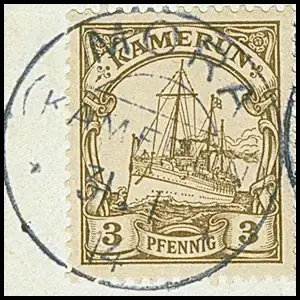
Mundeck
The term “Mundeck” refers to a geological formation in the Douala-Kribi basin area. This is now a small village known as “Moundek” in modern Cameroon.
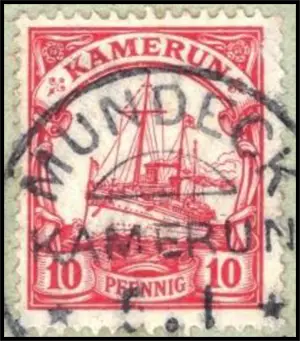
Ngaundere
Spelled as Ngaoundéré in French, this is now a city of more than 200,000 residents located in Adamawa Region in the northern part of central Cameroon.)
Ngaundere was the planned terminus for the Central railway planned by the Germans; however, only a small section of about 150 km (100 miles) starting at Duala actually opened during the German period, and only at the very end of June 1914. The rails would not reach Ngaundere until well into the French period.
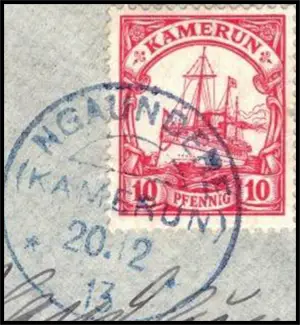
Njassi
Now Ndjassi, this is a village which had just 500 inhabitants in 2005. It is uncertain why the Germans opened a post office here. The town is located in a rural part of Cameroon’s East region.
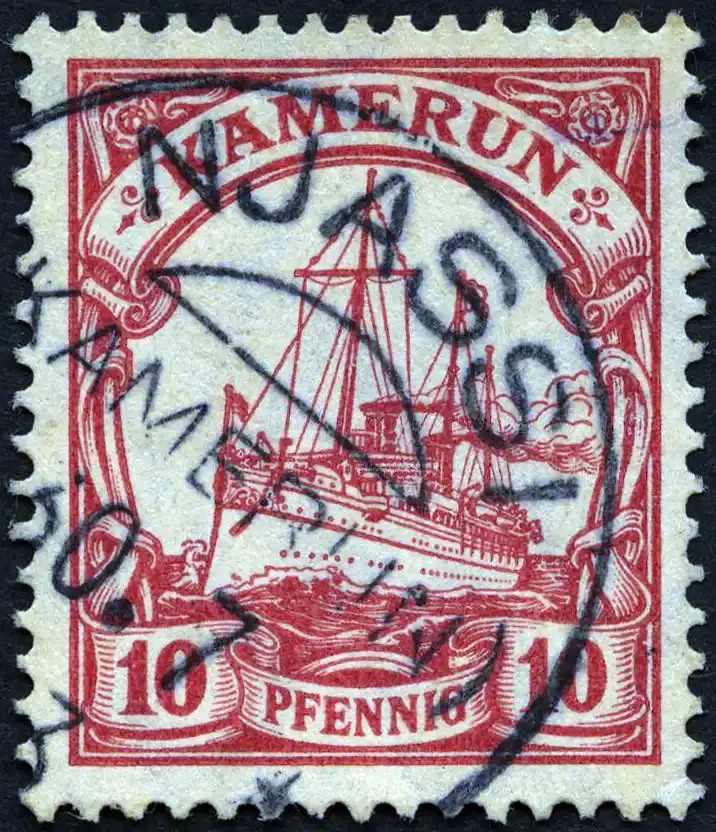
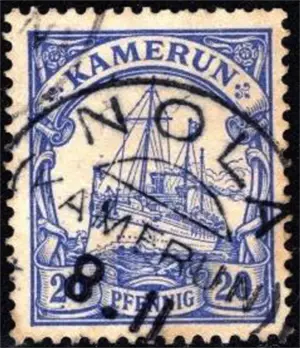
Nola
The town with the German Kamerun post office of Nola was part of the Neu Kamerun territory ceded by France in 1911. The French retook control of the town in mid-October 1914, and it returned to being part of the French colony of Middle Congo (Moyen Congo in French.)
Today, the town is in the Central African Republic, and is a locally important city. Confusingly, though, there is also a small village in Cameroon proper with the same name which did not have a German postal facility. (NK)
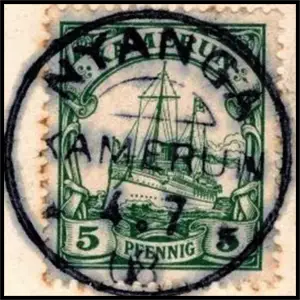
Nyanga
This is a small town of 1800 (as of the most recent Cameroon census) in the country’s Southwest Region. It was formerly part of British Southern Cameroons. (UKTT)
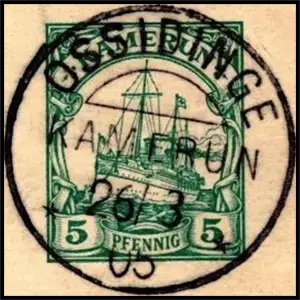
Ossidinge
This city would be renamed Mamfe during the British period and is located in the former British Southern Cameroons. A city of 30,000 inhabitants, the city has recently been a site of battles related to the “Anglophone Crisis” in Cameroon. (UKTT)
Plantation

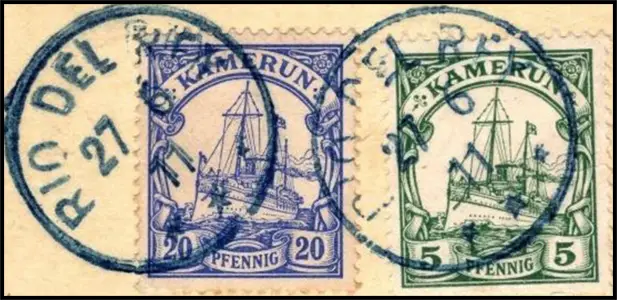
Rio del Rey
The site of this post office in located in the Rio del Rey estuary of the Ndian river, which is located a few kilometers from the Cameroon border with Nigeria. It is located in the former British Southern Cameroons. (UKTT)
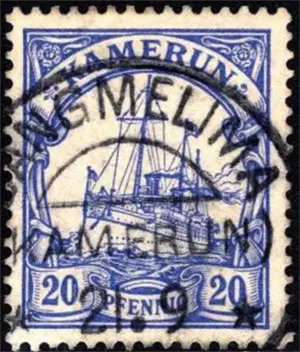
Sangmelima
Ssanga-Ngoko
This was a postal facility located close to the border with Gabon at the confluence of the Sangha and Ngoko rivers. Despite its proximity to the border and being located on two navigable rivers, there was little activity here postal or otherwise.
The post office closed in early September 1905, just nine months after opening on 1 December 1904. For this reason, the Ssanga-Ngoko postmark is the great rarity of Kamerun postmarks, with an ArGe catalogue value of €2,000 for an on-piece strike.
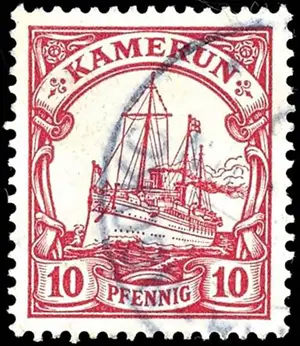
Ukoko
Ukoko was known unofficially as “Coco Beach” locally, although the Germans never referred to it as such. It is located in a small strip of land in the portion of French Equatorial Africa located to the south of and on the border with Rio Muni (then Spanish Guinea), which was ceded to Germany as part of Neu Kamerun. Presently known as Cocobeach, in the Republic of Gabon. (NK)
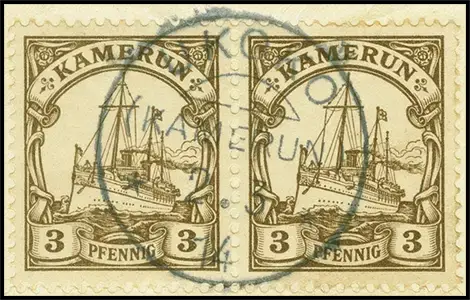
Viktoria / Victoria

Although still referred to locally as Victoria, the name of the town was changed to Limbe in 1982. Founded by the British in 1858, overlapping claims in the area between Britain and Germany left Victoria’s fate uncertain. In 1887, the British gave Victoria to the Germans in exchange for German claims in Nigeria and South Africa which were given to Britain.
The town was known as “Viktoria” from 1887 until 1900, when the spelling was changed to “Victoria.” The town ended up in British Southern Cameroons, until it voted to rejoin Cameroon in 1960. (UKTT)
Post-war, distinctive stamps produced for French Cameroun would appear in 1925 once France’s League of Nations mandate had been secured. Nearly all the territory acquired by the Germans in 1911 was returned to whichever French colony it had originally been attached to, and the vast majority of the Kamerun’s territory was mandated to France.
In contrast, British Cameroons would remain a fairly narrow strip of land along the border with Nigeria for its entire existence. Stamps of Nigeria were used here, and can only be determined to have been used in Cameroons by cancellation. Distinctive issues, consisting of Nigerian stamps overprinted “Cameroons / U.K.T.T.” (United Kingdom Trust Territory) were issued in October of 1960, in the run up to the departure of the British. The northern half of Cameroons voted to join with Nigeria, and these stamps were withdrawn from that area in May of 1961. Southern Cameroons voted to federate with French Cameroun, leading to the withdrawal of these stamps from that area as well.
The rejoining of Southern Cameroons with French Cameroun also led to a temporary issue of French Cameroun stamps overprinted with new values in pound values, the currency in use in Southern Cameroons at the time of Federation. The former Southern Cameroons is also presently the site of a secessionist movement to create a new state to be called “Ambazonia”.
References
Friedemann, A. (1980). The Stamps and Cancels of the German Colonies and the German Post Offices Abroad, Section XI Marshall Islands. Translated by Alfred K. Walter. Wilmington, DE: German Colonies Collector Group.
Michel Redaktion (ed.) (2025). Michel Germany Specialized Catalog 2025 (Part 1). Bobingen, Germany: Schwaneberger Verlag Gmbh.
Nössig, T. (ed.) (2019). Catalog of the Postmarks of the German Colonies & Post Offices Abroad (1st English ed). Berlin, Germany: Arbeitsgemeinschaft der Sammler deutscher Kolonialpostwertzeichen.
Deutscher Wetterdienst. (2020, June 23). List of Overseas Stations. https://www.dwd.de/EN/ourservices/overseas_stations/overseas_documentation/list_overseas_20200623_pdf.pdf?__blob=publicationFile&v=3
Holschauer, G. Images from the Colonial Stamp Company reference collection. Retrieved 22 October 2021.
Krieg, H. Personal Communication. 23 September 2021
Illustrations courtesy of Philipp Ruge, Jochen Vogenbeck, G. Holschauer, M. Bratzel, Gannon Sugimura, & Jed Dorman.